
There is a saying in Thailand that you may have seen on a T-shirt: “Same same but different.” When you ask a local how Ko Samui compares to Ko Lanta, he might scratch his chin for a moment, then shrug and say “Same same, but different.”
Back in May I wrote about Bowerbirds, a species of bird that attracts its mate by creating works of art. Their almost human-like values of beauty remind us that the superficial quality of form is the only thing that makes us different from other life. The function is pretty much the same, only the methods and styles differ. Within the narrower spectrum of different human populations, we’re even more alike.
Thailand has become a rather heavily touristed country, and I suppose that has taken the edge off the culture shock a westerner might feel stepping out of an airport taxi into the streets of Bangkok. For me it was a little bit of an adjustment, but I have to say I was surprised at how similar this side of the planet is to the side I’m used to. Read More

Yesterday I came across a familiar quote on Twitter:
“I haven’t failed. I’ve just found 10,000 ways that don’t work.”
~ Thomas Edison
Then today I came across an equally interesting quote from another historical figure:
“I haven’t failed. I’ve just found 10,000 ways that don’t work.”
~ Ben Franklin
Oh.
With the information age in full swing, I see a lot of this nowadays. Two versions of the truth emerge, each as unassuming as the other.
So are we to just pick one? I guess. Which one do you believe, that’s the real question. And once you pick a belief, are you going to call it knowledge? Read More

In the 1980s, New York City’s crime rate was soaring. Total crime had more than doubled over the previous two decades; violent crimes tripled. It peaked in 1990 and then began a sudden, nationwide decline as the dismal economy began to show new life.
But New York’s economy did not follow the national trend. It remained flat. Yet crime plummeted to a third of its peak rate, surpassing the drop in the national average. New Yorkers say they feel the safest they have in years, and the city’s notorious subway system is no longer the fearsome dungeon it once was.
Exactly what they did differently is the subject of some debate. The authorities tried all sorts of things, but there is one measure that is widely credited for being the catalyst that made the other approaches effective: Read More
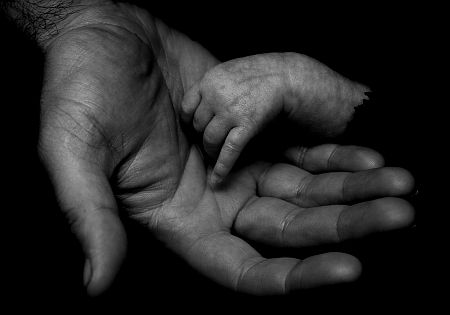
Today’s article is a guest post by Josh Hanagarne from World’s Strongest Librarian. Read this post with reflection; it says much more about humanity than may appear at first glance.
***
“And I held the hands while she died. Those hands that hit me.”
She had come into the library to check out a book on grieving. As she talked about the passing of her mother, she seemed to forget that I was in the room — or that the room existed at all.
In that one sentence I heard the best and the worst of humanity — all reflected in these amazing tools hanging from the ends of our arms.
She may never think of me again, but I will never forget her. Read More
by
Josh on September 14, 2009
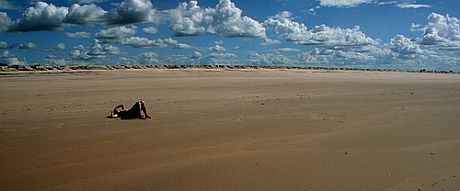
As promised, here is what I plan to do before I die. This list is now a permanent addition to Raptitude.com, and the most up-to-date version can be found by clicking “The List” tab on the top of any page.
If you want to make your own list, here is the comprehensive guide to making one that you will honor.
A few notes:
You’ll notice my list is very travel-heavy. One of my major goals in life is to achieve a location-independent income, which will allow me to move around the globe without the constraint of limited vacation days. Without the intention to live this kind of lifestyle, my list would not be realistic to me and I’d probably soon forget about it.
I have tried to eliminate redundancies, but some are inevitable. I want to see the Louvre
and tour Paris, but it is unlikely I’ll do one and not the other. Still, both are important and I don’t want to leave either off my list.
The list is not complete. I cannot be sure I’ve thought of everything that deserves to be on it, but this is a pretty good start.
Here goes. Read More

Last week, convicted Lockerbie bomber Abdelbaset al-Megrahi was released from prison by the Scottish government, on “compassionate grounds.” He is dying of cancer and has less than three months to live. Initial reactions were strong, but deeply divided. Here are just some of the millions of opinions that flew back and forth on Twitter, in the hours that followed:
I hope his plane falls from the sky like the 283 people 20 years ago.
~ Tony Callaghan
Lockerbie …. I hope everyone in SCOTLAND gets cancer.
~ John Wright
Lots of anger about Lockerbie bomber release. Worth noting that the case against al-Megrahi was always somewhat dubious.
~ Matthew Pallas
Why did they release that bloodthirsty killer MEGRAHI? COMPASSIONATE GROUNDS! What about compassion for the Lockerbie victims families!
~ Henry William Louis
So Megrahi is released. I am proud that we are capable of such humanity even as we still grieve for those lost at Lockerbie.
~ Clare Meikle
Oh Scotland, may I remind you that Muslims have no concept of compassion and mercy. Freeing Megrahi will be a show of weakness in their eyes.
~ Rachel Hunter
Mind is changed on Megrahi, [Scottish Justice secretary] MacAskill made good points…. Hopefully this will help build bridges with the East.
~ Thomas Scott
Totally and utterly shocking that #megrahi – mass murderer – is now FREE!! Where’s the justice??? I’m ashamed to be Scottish today!! >:-(
~ Colin Sales
“Where’s the justice” is a good question.
I contend that there is none to be found here. How do you make the deaths of 270 innocents just? What action could one possibly take at this point to create justice out of this, or this? Read More
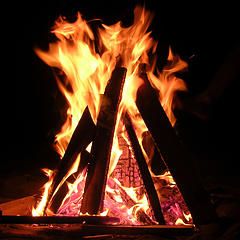
Sweaty, muddy and bleeding a little, the three of us picked our way through the overgrown ‘trail’ that snakes between Blue Lake campground and the remote, mythical Goblin Lake. We were traversing the final leg of our return trip through a wondrous forest of moss, bogs and toadstools, but the hike had been taxing. We had survived eleven kilometers of difficult terrain, countless detours, and a few brief, horrific moments when we thought we’d lost the trail.
If you’ve never been, the Canadian Shield hosts some of the most spectacular natural scenes anywhere. I just got back from a weekend of camping in western Ontario. The Shield is the Canadian wilderness stereotype in a nutshell: towering pines, overgrown crags of rock, moose, deer, loons, and crystal clear lakes. It’s a vast ‘shield’ of granite covering over half of Canada, speckled with millions of lakes carved by ice age glaciers.
Despite the clichéd tourism slogan, It is surprisingly difficult for a city-dweller to truly “get away from it all.” From my home city, the land is cultivated for many miles in every direction, crisscrossed with farm roads and power lines. Hike a mile into the trees and you’ll still hear the drone of the highway in the distance, at the least. Campgrounds and lodges do get you closer to nature, but it’s still a far cry from experiencing a wilderness that is completely uncompromised by human activity.
Goblin Lake’s appeal, apart from its Tolkien-esque name, is that it is remote and difficult to get to. We met other hikers who had turned back because of ‘impassible’ terrain, which only made it that much sweeter when we did emerge from the forest to set our eyes on this magical, pristine lake. Read More
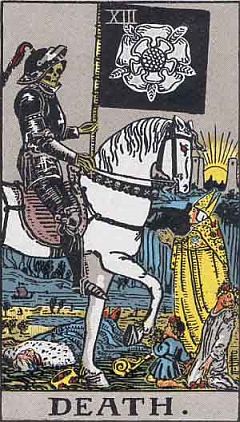
It seems that we are members of the only animal species that lives most of its life knowing that it’s going to die. I sometimes wonder if life would be easier if we didn’t know it. It really is the worst of all spoilers. Happy Monday, by the way.
Now, there are other animals that do seem to realize when death is approaching; venerable elephants famously leave their pack to die in seclusion, and dogs and cats often run away from home or hide when their end is near.
But I suspect they don’t quite know why they’re inclined to do these things. It seems unlikely that they do it out of a rational understanding of their life cycle; I suspect that the urge just mysteriously comes over them along with the illness and weakness, and they take heed.
In any case, they don’t seem to know what’s coming until it’s on their doorstep.
Human beings, for better or worse, inevitably gather a more complete understanding of death, and very early on. We learn the concept of death as children. A person can’t live for more than four or five years without discovering the unpleasant fact that they are ultimately, well, doomed. Every child soon encounters a situation that someone else must help them understand by breaking this sad news, whether it’s when a pet disappears, when they ask where their grandma’s grandma is, or when they watch the Mr Hooper episode of Sesame Street.
Read More
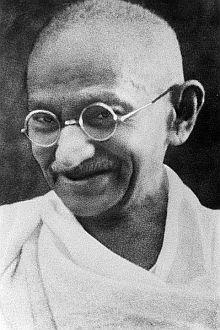
Mohandas Gandhi, in his search for the true roots of human violence, identified seven categorical acts of “passive violence.”
They each mark a common human oversight that leads to suffering and destruction. Supposedly, there are no other mistakes of significant consequence.
These are too elegant to spoil with my own commentary, so I’ll just leave them naked, for you to consider.
1. Wealth without work
2. Pleasure without conscience
3. Knowledge without character
4. Commerce without morality
5. Science without humanity
6. Worship without sacrifice
7. Politics without principle
If you have a dilemma, can you find its root in one of Gandhi’s blunders?
Have a happy and thoughtful Wednesday. – David
***
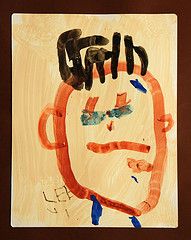
Over thirteen years of grade school, the average student probably hands in a small forest’s-worth of worksheets, journals, drawings and assignments. So much of it is profoundly unmemorable: lab notes, arithmetic tests, book reports, and all other sorts of by-the-numbers tedium.
The creative work, however, is much more revealing. When a kid is asked to draw a picture or tell a story, the mind flies wide open, perhaps more so than it ever could later on in life, once the child has learned what the world considers immature, upsetting or otherwise unacceptable.
Minds Revealed
In “88 Important Truths“, number 8 was “Children are remarkably honest creatures until we teach them not to be.” As kids, we could spill our thoughts right onto the paper with only a trace of the self-censorship that is so pervasive for an adult.
Sitting down to write, as I do today, I’m all too aware of how my thoughts might be perceived and interpreted. I know (or at least I think I know) what the audience is likely to read into it, and so I edit, adjust, and omit accordingly. By the time the finished product is delivered, its character has been shaped by deliberation and second-guessing, with many of my original thoughts removed for the purposes of clarity, cleanliness, and convention. Read More
 I'm David, and Raptitude is a blog about getting better at being human -- things we can do to improve our lives today.
I always enjoy your posts. But what I love most about your site is the absence of ads. I find it so incredibly ironic to be reading a post about living an intentional, distraction-free life - setting devices aside, unsubscribing to everything, etc. - while constantly dodging pop-up ads. Your...