Switch to mobile version

productivity

handwriting

When I was taking French classes a few months ago, we were each asked to write a composition in French and pass it to another classmate to read. It struck me then that I very seldom write more than a Post-It note’s worth these days. By the end of a paragraph, my hand is cramped and sore.

And what an ugly paragraph I created. My letters were inconsistent and strangled. To this day, after nearly twenty-five years of handwriting experience, I suck. With considerable shame, I passed my composition, which demonstrated both the penmanship and language skills of a six-year-old French boy, to another classmate.

As if to redeem me, I received an even uglier paragraph from the student to my left.

My generation is lost for handwriting. I’m a computer person. I write thousands of words a week, almost entirely by pushing buttons. My penmanship skills are rarely called upon, and I know I’m not the only one.

After a few weeks of class, I had a chance to see everyone’s penmanship at least once. It ranged from virtually indecipherable to pretty good, but none approached the elegant cursive one might see in a Christmas card from an aunt born before the war. Read More
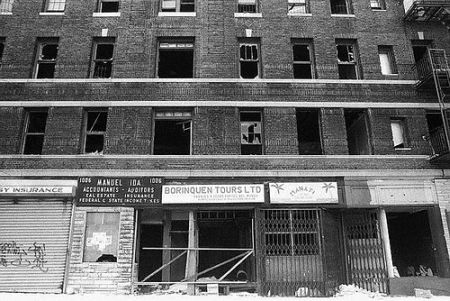

Storefronts in the Bronx

In the 1980s, New York City’s crime rate was soaring. Total crime had more than doubled over the previous two decades; violent crimes tripled. It peaked in 1990 and then began a sudden, nationwide decline as the dismal economy began to show new life.

But New York’s economy did not follow the national trend. It remained flat. Yet crime plummeted to a third of its peak rate, surpassing the drop in the national average. New Yorkers say they feel the safest they have in years, and the city’s notorious subway system is no longer the fearsome dungeon it once was.

Exactly what they did differently is the subject of some debate. The authorities tried all sorts of things, but there is one measure that is widely credited for being the catalyst that made the other approaches effective:  Read More

surfing at sunset

There is only one success: to be able to spend your life in your own way. ~ Christopher Morley

The principle of the life list is simple. You list all the things you want to do in life, and cross them off as you do them. Try to do them all before you die.

It’s easy and fun to make one, but to create a list of dreams that will actually come true is not quite as simple as merely writing down what you want.

You may have made a life list before. Where is it now? Probably in a landfill, like most life lists. It’s too easy to let life get in the way. You get busy, tied up with more immediate concerns, and your dreams become less and less relevant to your actual life.

But not everyone’s list gets abandoned. John Goddard is known best for living out the ambitious life list he made at age fifteen.

Even though it includes many difficult and humongous items (for example, number 113 is “Become proficient in the use of a plane, motorcycle, tractor, surfboard, rifle, pistol, canoe, microscope, football, basketball, bow and arrow, lariat and boomerang,”) as of today he’s checked off 111 of his 127 goals, and some are partially complete.

Why did that 15 year-old boy’s list go on to define a lifetime of achievement and adventure, while most life lists are eventually forsaken?

Because he really meant it.   Read More

ding!

Asking for help has always been so hard for me. I always hated it when I couldn’t do something for myself. I felt like a failure. I was so used to being asked for help, I sort of felt like I’d lose my identity as “the knower” if I put myself on the other side of the table.

I flunked in college because I was utterly terrified to ask for help. Admitting I was lost and needed help was, for me, like stepping out of a plane without a parachute. Even if I wanted to do it, my body wouldn’t budge. Believe it or not, through twelve years of grade school I did not once say, “I don’t know how to do this. Please show me.”

I would do anything else instead. Skip class to study it on my own, work backwards from the solution in the back of the text, or most often, simply avoid it for the rest of my life.

Naturally, this strategy caused some problems. Read More

Post image for This Will Never Happen Again

Nothing is permanent.  That’s not really news, but it may mean more than you think, on a day-to-day level.

In each moment, everything around you is constantly changing, and it never changes back. It’s always new.

Some changes are subtle, some dramatic, but all of it is changing.

Life is uncertain by its very nature.  Except for this:

No matter what is happening right now,

It will never happen again.

Not quite like this anyway. Read More

One tree

In the depth of winter, I finally learned that within me there lay an invincible summer.

~Albert Camus

This year is my 29th year on earth, and I’ve decided to make it the most memorable and remarkable year I’ve ever had.  My entire adult life I have felt the unsettling feeling that I am not living up to my potential, and finally — just this year — that feeling is gone.  I’m cruising, not treading water like before.

The choice to build a blog emerged as part of a personal renaissance of sorts, a shift in priorities that has changed my life dramatically over the last year or so.  I’ve finally reached a point where I’m organized and clear-headed enough to be continuously moving towards what I really want in life.  I’m learning a language, getting in shape, getting fantastically organized, and honing skills I’ve long neglected. Read More

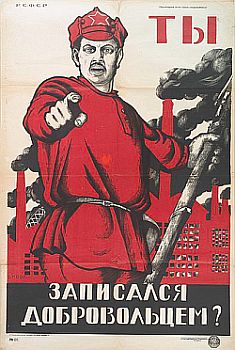
They want you

Difficulty strengthens the mind, as labor the body.

~Seneca

In Experiment No. 1, I set out to condition my mind by introducing it to frequent meditation sessions, and reported the results here on Raptitude.  It was a real eye-opener for me, and I was able to break new ground in terms of my understanding my mind.  In other words, I feel markedly stronger, mentally.  For Raptitude’s second official experiment, I’m going to get physical.

My weapon of choice is actually one Soviet troops used for many years to stay one glorious step ahead of their capitalist foes in the realm of physical prowess.  While western drill sergeants were punishing their men with long jogs and pushups by the dozen, Red Army soldiers were out in the pastures hoisting 53-pound iron balls above their heads a thousand times.  Every morning.  In a blizzard.  Taking breaks only to wrestle bears, for fun. Read More

Tick tock

When I was a teenager I might have identified money as my most valuable resource.  I don’t think that’s extraordinarily naive, I mean it did always help to bring me the things I wanted: freedom, influence, power, comfort, beer.  It’s so versatile you can do just about anything with it.  More money meant more ease, more pleasure, more happiness.

As I got older and busier I learned, as many do, that time trumps money by a long shot.  One can use time not only to make money, but also to build the capacity for making more money in less time, by improving skills and setting up streams of income.  Not only that, but extra time gives you the temporal space to enjoy the privileges and powers you already have.  More time means more freedom, more options, and less stress.

Unlike money, everyone is ultimately on a level playing field when it comes to time.  We all get the same allowance of twenty-four hours a day.  Just as there are ineffective ways of investing your money, there are ineffective ways of investing your time.  Read More

wilting flower

Would you rather vacation in Rome, or get your closet organized?  Quit your job and make a living doing what you love, or take back your library books a week early?

Each of us spends a full twenty-four hours, every day, doing something.  Each of the hundreds of actions you take in a day supposedly brings you closer to something you want.  You get groceries because you want to be able to make supper later.  You sleep because you want to be well rested.

We spend much of our time on the simple everyday tasks required to keep our life afloat, such as working to pay the bills, tidying up, organizing, fixing, shopping.  Maintenance of all sorts.

But most of us also spend some time working towards grander outcomes: traveling to exotic countries, building a business or a dream career, buying a sailboat or mastering some skill or craft.  Some people are more focused on these things than others, but we all have dreams.

Here’s a negative pattern I’ve observed in myself that you can probably identify with, along with a way to stop it dead in its tracks. Read More

Desktop version

Raptitude is an independent blog by . Some links on this page may be affiliate links, which means I might earn a commission if you buy certain things I link to. In such cases the cost to the visitor remains the same.