I remember a surreal moment about twenty years ago, which felt like the beginning of something bad, and it was.
I was at a bowling alley with some friends, and a few people in our group were talking about Facebook. I knew what it was but had no interest in it. Then one of them turned to me and said, “There’s lots of pictures of you on Facebook!”
This kind of stunned me and I didn’t know what to say. I hadn’t joined this website but somehow I was one of its features.
A year later all of us were using it. It was exciting at first, because it seemed to give us more access to the people in our lives. We could post photos, make plans, and stay connected to a wider circle of people.
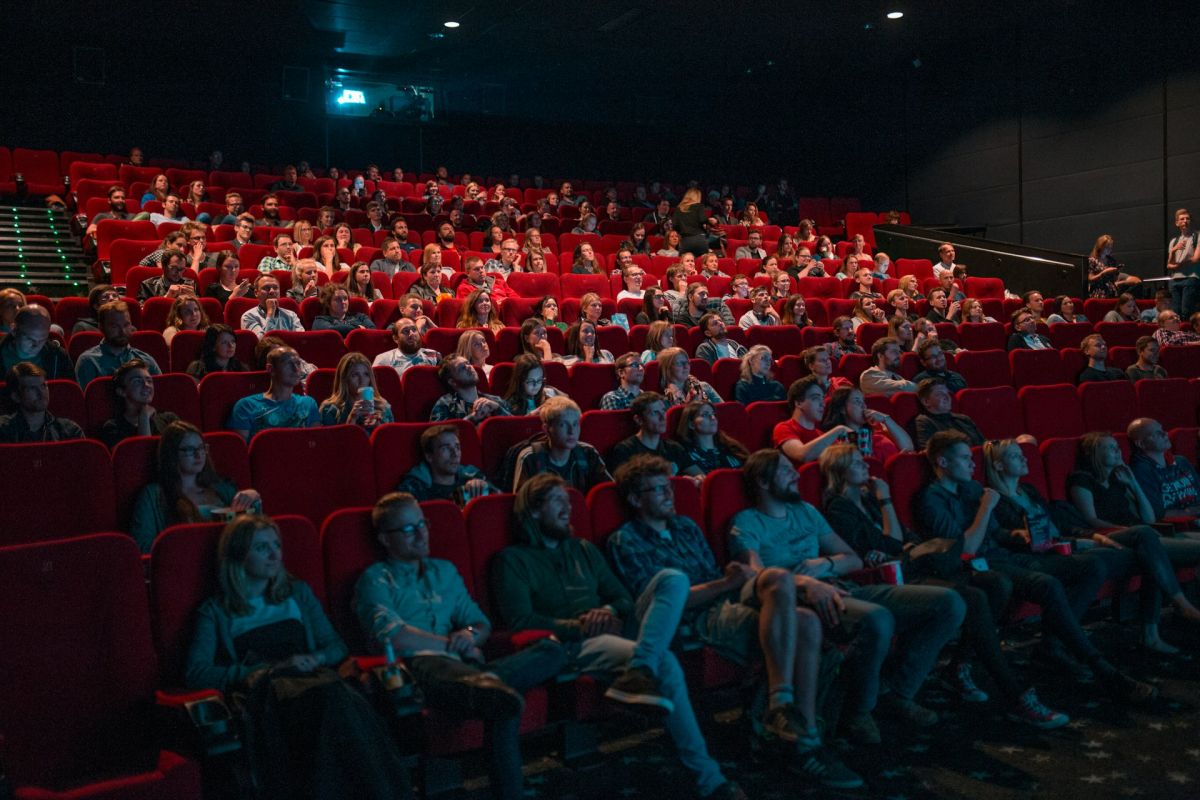
I should note for younger readers that the term “people” at that time only referred to real, physical beings: persons with bodies that walked and drove around and did things. Having friends largely meant physically traveling to the same apartment, bowling alley, restaurant, or movie theater, positioning our bodies amongst each other in this physical space, and interacting using our faces and voices and hearts. The part of your life that consisted of this type of physical activity was called social life.
Social media was meant to facilitate this thing called social life. Facebook’s original purpose was to keep you in touch with people who would otherwise fall out of your social circle, namely people you went to school with.
It didn’t really do that. It mostly became a thing to do on your computer by yourself. Within a few years, social media came to be seen as a sort of processed-food version of social life: convenient, low-quality sustenance that should not make up most of your diet. It still seemed like food though, just crappy food.

I’ve been complaining about social media forever by this point, and so has everyone else. But a recent effort to actively rebuild my social life has revealed something about how these two things relate. Social media isn’t a cheap and inadequate facsimile of social life; it’s its exact opposite. It isn’t worse than social life at fostering personal connection, it undoes personal connection and reverses our social skills.
This is because social media doesn’t really allow you to interact with people. People are living beings with beating hearts and live emotions. Social life has always been about engaging in the immediate physical presence of such beings. Social media avoids exactly that part, while allowing you to exchange information and symbols of approval.
In a real social interaction, you’re entangled with the other person, physically and emotionally, in real time. Eyes are looking, faces are expressing, and emotions are humming, one hundred percent of the time. It’s nothing like browsing content or sending off messages — it’s much more akin to riding a horse. Moment-to-moment care is required. It can take you to all kinds of new places, but it has its hazards. You have to stay alert, watch your footing, and keep your heart open to this other living thing you’re entangled with. Doing it badly can lead to a nasty upset or even physical danger.
Online, you don’t interact with living beings. You interact with filtered bits of data issued by unseen, presumably living beings – messages, pictures, links, memes. Each party communicates like a paranoid medieval king, who sends out heralds to convey his latest position, then raises the drawbridge again.

Real interaction isn’t information exchange. It involves performing a host of specific, right-brained skills, all at once – how to get someone’s attention in a way agreeable to them, how to explore their preferred topic, how to take offense gracefully, where to put your eyes and your body, how to know when to unpack and when to summarize, and a lot more.
It all must be done live, with an audience. The human being is built for this sort of thing, but it still has to be learned by doing. The voice, face, body, and heart can work together the way a competent driver’s hands, feet, and eyes operate the steering wheel, gas pedal, turn signal, and mirror as though they’re one. When it’s really clicking, it’s a beautiful thing.
And none of it resembles in any way what you do when you thumb through an app. Social media is just a kind of solitary data processing game. You can exchange information while staying safe from the delicate challenges of real interaction. You can issue your opinions without the heat of real eyes looking at you. You can feel heard, and engage with “the world,” without ever having to account for the immediate presence of another person’s heart.
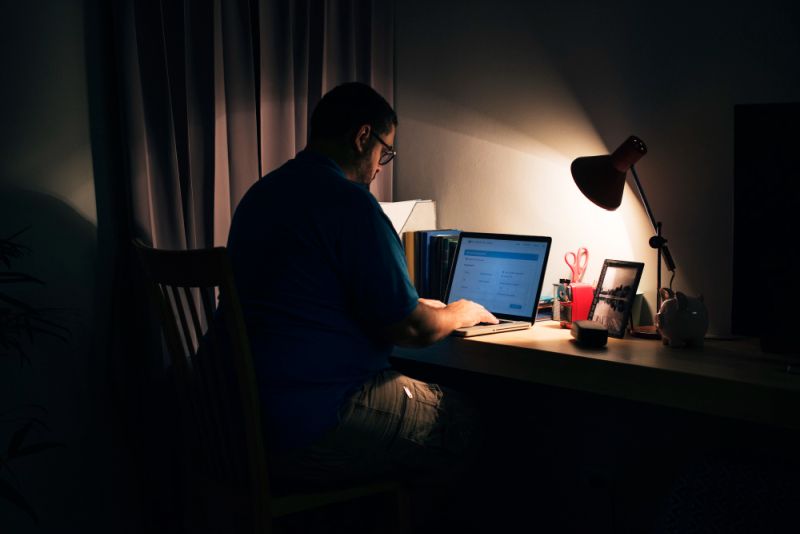
I think that’s why social media remains somewhat irresistible to many of us. The human being has powerful cravings for certain social rewards – approval, status, reassurance — but would like to have them without the hazards of real social life. Mucking up a real interaction is painful, and if your skills are poor, improving them is a major trial. Social media walls off all that trouble, while allowing some of the low-level rewards to come through, in the form of likes, stars, hearts, and other fake internet points. You can enjoy these scraps of approval while the wall shields you from the heat and danger of real-time entanglement with another human being.
These platforms now offer filters to make sure only the agreeable bits of other people come through. If someone gets annoying, you can mute them. You can filter out messages containing particular words. The algorithm will learn your intolerances, and show you only the parts of others that require less of your empathy and understanding. It’s no wonder that many people pride themselves on having zero tolerance for differences of political opinion — that degree of intolerance is actually possible now.

I’m sure some people have figured out how to use this technology to aid social life. But I think most of us have ended up using it unwittingly to the exact opposite effect, as protection against social life.
I guess what I’ve discovered, or re-discovered, is that social life was always a matter of physical action. It’s about getting your body into proximity with other bodies, of physically entering the voice- and heart-radius of other people. It involves things like dressing in front of a mirror, finding parking, entering buildings, shaking hands. It’s sitting across from people in living rooms, restaurants, and church basements. This sounds so obvious typing it out, but somehow I forgot for about twenty years.
***
Want to quit something?
Raptitude has a “Renunciation Club.” We give things up one month at a time, and see what happens.
Take a break from TV, drinking, complaining, social media, eating M&Ms in the car – anything you want to step away from for a bit, for any reason.
Keep us posted on your progress. Get support. Support others.
It’s free. Join here.
 I'm David, and Raptitude is a blog about getting better at being human -- things we can do to improve our lives today.
Thanks for posting this, David!
I guess we had to loose a lot of the things we took for granted, just to realize how valuable and import they are. Now it takes a conscious effort to get them back. I hope it’s worth it for all of us.
All so true! Back in the heyday of my own social media use, I’d reach out to casual friends who would like or comment on all my posts to connect irl and it was fascinating how some people really shied away from that, like an inappropriate step gone to far, into dirty reality. A reminder that those online connections can mean nothing.
One of my favorite writings about social media laid bare is a fictional chapter about algorithms in the book Wellness by Nathan Hill. Highly recommend if you haven’t already read it.
Spot on read my man, as per usual. With an 8 year old son largely free (so far) from electronic life, it breaks my heart to be walking him home from third grade along the horse trails, to then pass by the realm of teenagers freshly released from their daily educational hold, and witness them sitting within several feet of one another, often with their backs to one another, slumped over their phones and otherwise appearing motionless.
I long for the days (and I lived them so I know they weren’t only a dream) when kids would roam free all throughout town, parents might worry a bit, but didn’t expect constant check-ins or GPS tracking, so long as you made it to the dinner table and didn’t flunk out of grade school.
Brings water to my eyes just to think about the starkness of this contrast. And I grew up LOVING the internet, for all its novelty and newness. But I still lived away from screen. And to ruthlessly acknowledge, I for certain have been more beholden to my desk and devices throughout my adult life than I ever would have preferred.
I make every effort to set the better example in the presence of my son, by spending time outside, with others, playing sports, hiking in the mountains and boogie boarding at the beach. It’s high time I produce more of that effort strictly for myself as well.
Hey Geo. I’m also glad I got to grow up during the “before times.” The internet wasn’t really a thing until I was 14-15, and we’d play outside and our parents would call our names from the porch at dinnertime.
I’m hoping that there’s a sort of cultural rebound as it becomes more obvious what we’ve lost. Real-time interaction with real people is so therapeutic that it’s impossible not to realize its value when you get away from it and come back.
Thank you. As someone who does not participate in social media, I agree that it takes extra effort now to connect with “real people” and enjoy a face to face conversation. Which is very life affirming- I’m no longer invisible and easily dismissed. I am finding that even small real interactions not only benefit me but seem to enhance the other person’s day i.e. personal contact by personally making eye contact and thanking the store cashier, restaurant staff, people holding the door so i can get in with my walker. On the negative I have also found that I am excluded from interacting with other artists and businesses who limit their contact to just social media.
I’ve noticed that a good interaction with a stranger or acquaintance really can make a whole day. The effort is so worth it, but it’s so easy not to do it, especially as it becomes less of a norm and more of an exception.
Throughout the movie theatre & television screen era, there was a small reduction (so it seemed) of social gatherings outside of these media. With the advent of social media, (and the mobile iPhone): social gatherings (as per the article) soon took a derivative road to the point of near isolation.
In other words, the daily numbing of the mind via digital addictions (if you will).
Within our Western Civilization, I do think we’re currently taking stock of our most recent technological accomplishments, in order to prevent that numbing of the mind.
I have vague memories of adults in the 1980s making some of the same remarks as I’m making, but around TV. “It turns your brain to mush!” was the usual line. I had no idea what they were talking about. They would have been people who witnessed quite a change in one generation from the 1940s and 50s to the 70 and 80s. Each generation of technology is a new bombshell.
thank you for posting this electronic stuff has been on my mind for quite a while. try to back away from it as much as possible. one of the things that I am backing away from for sure is television news, 100% out of the room when it all possible. spent way too long being in news consumer and feeling frustrated and insulted.
I agree. I think news is especially insidious, at least now. It’s self-induced propaganda and nothing else.
I call it antisocial media. I do an antisocial media detox every February. I like that even, 4-week time frame.
People have used the word antisocial as a kind of inevitable wordplay on “social media” but it’s pretty appropriate! There’s a degradation of empathy, a transactional nature to it even though ultimately it’s real people on both ends.
Love this approach. I chose April and I’m proud that I made it past April’s Fools Day! I’m reading only what hopefully would spark face-to-face conversations!
I’ve had no part of social media for several years now. I likely miss some things that could benefit me in ways, but it’s clear to me it’s not worth it. Some growing percentage of people live some growing percentage of their lives virtually, which is not being human. Door-dash and a bedpan and never leave the couch. Is that our goal?
Reading this, it occurred to me that it feels like I’ve lost friends to this, as though they’ve been hanging out with a different crowd and left me behind, but they’re not hanging out with anyone. I listen to podcasts with really smart people presenting data and discussing all of the ill effects of social media, and the discussion ends with them listing all of their social media handles so we can “connect” with them. Kinda like someone telling us how bad alcohol is while slurring their speech and a whiskey bottle in their hand. Baffling, but as Hunter Thompson said, “it never got weird enough for me”
Thank you. A great analysis of what the social media phenomenon really is and what it robs from our lives. I do manage to put FB to good use, having friends around the world – and guarding always getting sucked in to the FB void by stuff I don’t need to know. I am 70, I wasn’t born with a computer attached, I think that this allows me to more easily see the evils in it. Just like seeing the evil in… TV dinners! Great images – NOT AI ….
I’ll turn 71 next month. Old enough to miss out on the social media bandwagon, young enough to have a million better things to do. I don’t enjoy modern society enough to invite it into my daily life on a crazy commercial basis. When I was a kid, I took a computer class at the local community college – learning Fortran IV. Even then, with stacks of punch cards, I knew this wasn’t a future I wanted. I use computers as a necessary tool these days.
I like real life, real food, real people. This stuff isn’t for me.
It makes me sad to see a parent scrolling through his/her phone while walking with a child. Such missed opportunity for connection. It even bugs me if the person is walking his/her dog! And to see people in restaurants seated at the same table, but one or both just scrolling through their phones—really sad.
When the grandchildren visit me, the rule is ‘no screens at Nannie’s!’ We play in the yard, walk to parks, play board games, playdoh, draw…lots of interaction is the best!
A few years ago, I read the book Bowling Alone. It was written in the 90s and discusses the slow dismantling of our social institutions over decades, as people (at least in the USj become more and more isolated.
This was in the 90s! Social media seems to have poured jet fuel on this fire.
Thought provoking article, thank you. My iPad tells me how many hours I’ve averaged per day on it, I was horrified at around 4 hours, basically doom scrolling.
I retired 4 years ago and on day 1 unsubscribed from Linked In and Twitter as these were work requirements. January this year I abandoned Facebook, just too much hate.
So, looking at the iPad data it seems ‘news’ is my time eater along with YouTube. I stopped paying for YouTube this month, the advertising makes it almost unwatchable so we’ll see if that brings the time down.
News will take some effort to avoid.
Now I’m retiring I’m removing myself from social media, previously thinking I needed it for my business, and finding every day without I feel more myself, and every acct/app I delete is a weight lifted.
Email subscriptions are enough to keep me informed about the things I’m actually interested in at the moment
Hey, David. I’m sure you’re past responding to comments on this by now. It’s been a while since I visited your site but I read this article and wound up writing a meditation on it over at my Substack. Thought you’d appreciate the link:
https://open.substack.com/pub/jimhorton/p/tir-na-nog
talk about boredom!!!
Comments on this entry are closed.