
My cat refuses all medicine because she doesn’t understand the benefits. Nothing can make her see that having bitter liquid squirted into her mouth will prevent her from getting intestinal worms.
So I have to force the matter by wrapping her in a towel like a burrito, so that she can’t fight back. I’m sure she sees it as pointless cruelty.
Because of her erroneous views and suspicious nature, I have to trick her to make this happen. To get a cat who rejects modern medicine into a towel-burrito, experts say to lay the towel flat on the floor for a day or two, occasionally leaving a treat in the middle. The cat will soon start loitering around the towel, eventually laying on it, waiting for it to produce its magic bounty. Then you spring the trap.
Even after that, the cat will still worship this mysterious, treat-giving towel. It’s been two years since I’ve had to give my cat medicine, but she will still keep vigil, eyes hopeful, on any towel left laying flat somewhere. I’ve turned her into a sort of one-cat cargo cult.
Of course, I can see exactly how she misunderstands the situation. The light of my knowledge shines in places that are dark to her. I know I’m giving her vital medicine; she thinks I’m humiliating her for no reason.

In hindsight, it is possible that she’s right and I’m wrong. Maybe this dewormer stuff is snake oil, sold to me by a crooked veterinarian, and I’m just humiliating her out of a nonsense belief that cats get “worms” in their bodies if you don’t squirt this special formula into their mouths. Now who’s the cultist?
It’s true that I could have done some research to evaluate that possibility. I didn’t, because I already felt like I knew.
The job of a belief is to look like reality
If you try to remember the moment you came to “know” a given thing, you usually can’t pinpoint it. You might remember reading it somewhere, or hearing people say it. In any case, it’s unlikely you got it from an unassailable chain of logic and deduction.
If a new idea seems to jive with other things you’ve read or heard, it will probably become canonical to your worldview right there and then. Now it’s just another thing you “know,” whether or not it’s true.

Beliefs are tricky in that they’re just thoughts, but they blend into reality like chameleons. If you wake up on a Thursday and believe it’s Friday, you experience that day as a Friday like any other, until the moment you don’t believe it’s Friday anymore. The job of a belief is to stand in for truth, to look and feel exactly like it, whether or not it ultimately corresponds to reality.
Everyone is the one exception to the rule
To stay sane in the age of angry opinion-havers, it’s helpful to recognize that beliefs have this chameleon quality built right into them. They always look like truths, as long as they’re yours.
Think of beliefs like dollar bills, in a world where many or most dollar bills are counterfeit. They get passed around freely, most never come under real examination, and tons of them are bogus.
The crazy-making part is that each person regards each of their dollars as genuine currency. After all, if you thought one of your bills was counterfeit, you’d throw it away, so it wouldn’t be yours anymore.
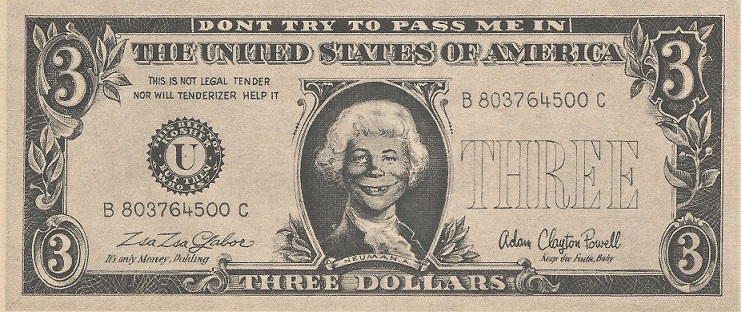
This means that to you, all of your beliefs always appear right. Someone else might identify some of them as funny money, when you insist that sharks don’t get cancer, or when you share your solution to Israel-Palestine at the dinner table. Yet each person can’t help but regard all of their own current beliefs as the real deal, otherwise they wouldn’t believe them.
This is an extremely weird condition to be in, and we’re all in it. The only reason to think you’ve got things right, that the world you see is the real world, is that you’re you.

The worst hobby
Bad things happen when you combine the self-affirming nature of beliefs with a habit of consuming lots of morally-charged content.
Many people make a daily routine of consuming large quantities of highly partisan content about “what’s going on” in “the” “world.” Enthusiasts of this hobby call it “staying informed,” and insist it isn’t just a personal habit but a civic duty.
[See also: Nobody Knows What’s Going On]
This content consists of new beliefs (“news” for short) about what happened today or yesterday, presented with an authoritative tone and little moral ambiguity. They identify clear villains and clear implications. They often give instructions from hand-selected experts on how smart people should think about this.

The only filter on the consumer end is whether these new beliefs seem to jive with existing ones. They usually do, because most of those existing beliefs were gained the same way. The moral of every news story is, “You’re right again!”
A chronic side-effect of this hobby is righteous hatred for people not in accordance with your sense that you are right again, even when the issues are admittedly complex. Why can’t that guy have only non-counterfeit bills, like I do?! He believes a thing that isn’t true! What a bad person!
Political actors, who thrive on simple narratives and inter-class hatred, encourage this worst hobby.

A simple habit for staying sane
So what do we do, given that all of us carry lots of fake dollars, and they all look absolutely real?
Aside from taking frequent, long breaks from the worst hobby ever, one powerful defense against the “I’m the exception” problem was suggested by eccentric writer Robert Anton Wilson.
He recommended adding a habitual “maybe” to your inner and outer pronouncements, even if (or especially if) you don’t think it’s warranted.
- That policy is exactly what we need. Maybe.
- I can’t get anything done in the evenings. Maybe.
- Anyone who believes [blank] is an idiot. Maybe.
- There’s no good reason to vote for that person. Maybe.
- Astrology is total nonsense. Maybe.

This indiscriminate maybe doesn’t tell you which beliefs are right. But it reminds you that you don’t only possess true beliefs, and that your bad ones always look like good ones.
It also makes your statement more palatable to most people, and probably more true.
More importantly, it undermines hatred and fanaticism. It’s hard to imagine righteous violence sustaining itself in the presence of any amount of “maybe.”
***
Last call for Raptitude Field Trip!
There’s still time to sign up for Raptitude Field Trip 2.
Here’s how I described it before:
The Field Trip is a fun and lightweight mini-course for helping people discover the hidden riches in day-to-day life, which is what this blog is all about. I try to keep the whole program about as cheap as ordering a large pizza.
It starts officially on February 10 so don’t wait. (You can sneak in a little late but not too late.)
Why do we have Raptitude Field Trips? This post explains.
***
 I'm David, and Raptitude is a blog about getting better at being human -- things we can do to improve our lives today.
Great article &pics! Taken to extremes this ‘maybe’ can leave you with nothing to believe in, no way to verify anything. But used judiciously, you end up with the Zen of ‘Don’t know mind’. Either way, we are corralled by our beliefs and its good practice to question them. Nothing is more powerful than someone telling you are right or you are wrong; either way the response is immediate.
I think beliefs are so compelling that there’s little risk of not having any at all, but since they look like truth you can have a belief that you don’t believe in anything. Even nihilism is a belief system! Don’t know mind is a such a powerful way to look into the world.
Whenever someone says, “I can’t imagine why someone would….” I try to remind myself that they are about to explain the limits of their imagination.
Here’s some ‘funny money’ for you. As a child I heard many times that a duck’s quack doesn’t echo. I only needed to hear a single quack in a canyon to completely negate that supposedly common knowledge.
I loved those books of fun facts as a kid and that duck quacking one was really common. I wonder where it came from.
Great article. But I come from a community that looks at false-beliefs slightly differently. A good way to check if beliefs (about a lot of stuff, maybe not morality and politics) are true is to see if you can track moving parts. We like to call it ‘gears-level’ beliefs.
There’s a famous experiment where you ask people to explain how a bicycle works, draw a diagram, etc. People who will confidently tell you they know all about bicycles generally can’t do it. They have an understanding that you sit on it and turn the pedals and go forward, but there’s a sort of black box between [turn the pedals] and [go forward].
You know who could answer that question? A bicycle mechanic. If someone *who has a detailed understanding of how the gears work* tells me something about my bicycle (like the chain needs oiling), he’s probably right. If someone who thinks it’s a black box tell me something, he might be talking out of his backside.
Once you start tracking who has good gears-level beliefs, you quickly notice that most partisan sources don’t qualify. That makes it a lot less tempting to slip back into bad habits. You also notice the rare exceptions. If someone writes an article on prison reform calling for specific detailed policy changes* then they probably know what they’re talking about. The distinction between that and the kind of people who bang on simplistically about being tough is just night and day. There’s a black box between [be tough] and [prisoner reforms] just like there’s a black box between [turn the pedals] and [bike goes forward].
*an example here in the UK is to please stop booting prisoners out the gates on Friday afternoon when they can’t get to a housing officer before Monday morning so they spend a weekend homeless and may commit a crime just to be able to sleep in a police cell instead. Even better if the prison could actually communicate with the local council to sort housing in advance, before the prisoner gets released and it’s suddenly an emergency.
PS: the original idea: https://www.lesswrong.com/w/gears-level
I like this idea and will look into it. I have come across the occasional lesswrong post but haven’t seen this one.
There’s definitely a lot of value in interrogating your own beliefs, and probably many methods for doing it, but as you’ve surely noticed it’s not very popular. I suspect the only people that do it at all are attracted to some aspect of the process itself (e.g. deduction, language, epistemology) because it’s a lot of work. And we’re still subject to all the same biases and illusions, just with more tools for sniffing them out.
Many years ago, when I was exploring different flavors of spirituality, I adopted a maxim: ‘I don’t have beliefs, I have possible scenarios I am currently entertaining.’ Granted, I’m sure I did and still do entertain some beliefs – but, I like to be reminded on occasion, as with this article.
I think that’s what Robert Anton Wilson encouraged people to do.
He advocated “never regarding any model or map of the universe with total 100% belief or total 100% denial”
The problem is that beliefs and reality are often indistinguishable. If someone is mad at me, I experience that as reality. But it’s possible to think I’m experiencing that person being mad at me, when that’s not what’s happening. We make little unconscious deductions all the time without realizing they’re deductions.
Oh lordy, if only I could get my father to realize his beliefs are not facts, I would be so happy. Instead all he does is regurgitate whatever Fox News or Newsmax was spouting that day. The most disturbing part for me is that these views reflect his personal beliefs, or he would not accept them so readily, which means he’s a racist bigot and incapable of seeing outside his white privilege box. I love him because he’s my father but if he wasn’t, he isn’t a person I would choose to spend time with, sadly. He has good qualities, but critical thinking isn’t one of them.
Do you think there’s anything at all that he has right that you don’t?
There are points we agree on, and I am open to changing my beliefs if evidence shows my belief is incorrect. If I find something he has right that I don’t, I am happy to adopt that belief.
Analyzing “evidence” within a reasonable timeframe is often a stumbling block.
“Maybe” reminds me of the way Dennis Miller would end his trademark Rants by saying, “but then again, I could be wrong.”
Excellent way to end a rant
I just wanted to say your cat is beautiful!
She’s a very photogenic cat!
You always know just what to say! As usual, I find your articles SO HELPFUL and the vibes are perfection.
Great article!
Side note: Whether it is actually necessary to deworm your cat depends on whether she is an outdoor cat that catches and eats mice or rats. These animals can transmit all kinds of parasites, including tapeworms, sorry to mention it…
I was fostering her at the time and the rescue has fosters do this as a condition of the adoption. I don’t know if she was an outdoor cat before.
This article really resonated with me David.
I once spent a fortnight feeling really tired. I put it down to the change in daylight savings. That extra hour my body-clock was adjusting for was really throwing me for a loop. I told my partner how frustrating it was that a single hour of shifted sleep could have such an effect. “I do night shifts all the time,” I said, “but it’s daylight savings that make me tired!”
Only daylight savings didn’t start for another week. I had got it wrong. I don’t even know how I formed the belief that daylight savings had changed. I was had spent two weeks feeling tired and not examining it in any way other than blaming a thing that hadn’t even happened!! What the hell brain!?
To me, viewing the Almighty as the sole possessor of “perfect knowledge” gives me great inner peace. It also makes research essential. By talking to people who hold different beliefs from me, or performing experiments attempting to disprove my own hypotheses, I as a mere human can strive asymptotically closer to the “truth” but never possess it. Our beliefs are models of how the world works. In the famous words of George Box “All models are wrong, some are useful”.
Comments on this entry are closed.