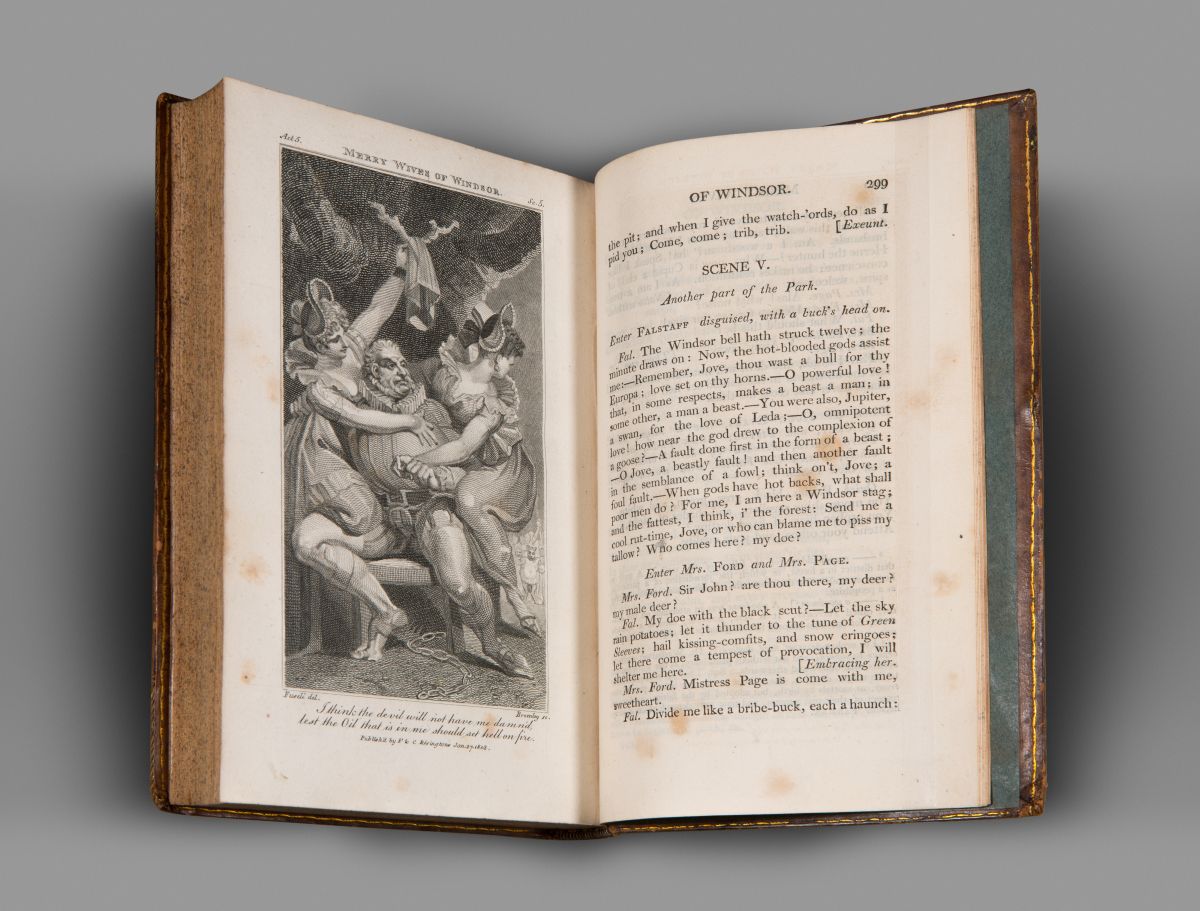
There should be a German compound word for the emotion you feel when you encounter a famous thing and realize you’d never actually seen it until that moment. (Ikonerwachen?)
I had seen a thousand images of the Sydney Opera House before my gaze landed on it unexpectedly as I was crossing the harbour bridge in 2010. I knew its iconic look from movies, travel websites, clipart collections, and Where in the World is Carmen San Diego — but only at that moment did I realize I’d never seen it before.
This happened again with the planet Saturn. From Mauna Kea in Hawaii, I saw the ringed planet in perfect focus through a large reflecting telescope, and it was spectacular. Voyager 1 photographs and textbook diagrams did not prepare my heart to see a real, physical object, hanging there before my eyes in empty space.
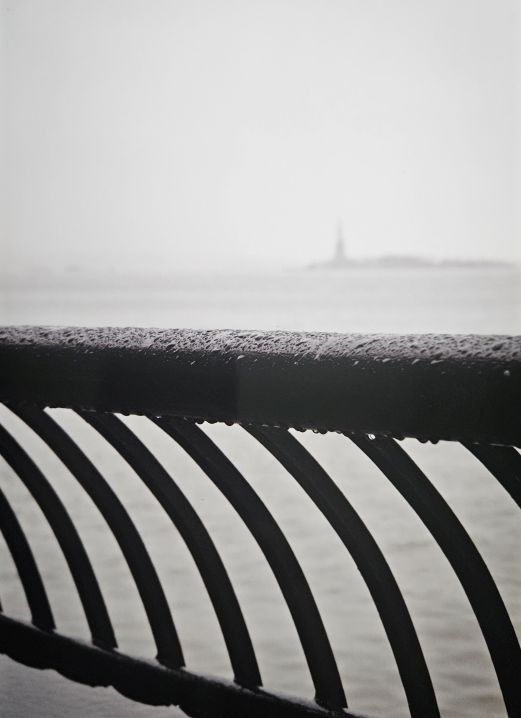
When I visited New York I had no intention of seeing the Statue of Liberty, because I understood it to be the most overexposed tourist attraction in the USA. On a dreary day in Battery Park, my heart stopped when my eyes caught her unmistakable shape way out in the water. Only at that moment did I feel her actual charisma and meaning. Finally I was experiencing the reason I had absorbed so many ideas about her in the first place.
In none of these cases did I believe the thing in question was worth seeking out, which is why those encounters were all accidental. I really thought my ideas about them were enough to “get it.” But I didn’t get it at all until I saw the originals.
This is a shame, because it’s the most notable things that attract the most preconceptions. The more unique and meaningful an object is to human beings, the more likely it is that your first, second, and hundredth encounters with it will be bloodless depictions of that object. Over your life you’ll absorb countless views of the thing – opinions, caricatures, bad art, knowing jokes – before you experience the real reason all those views exist, if you ever do.
For example, you probably can’t listen to Mozart’s Eine Kleine Nachtmusik without thinking of commercials and bad comedy films using it to satirize rich households. With the best stuff, there’s always so much baggage, and the baggage arrives first.

Even when you do manage to access the original, it can be hard to disentangle it from your preconceptions. If you think classical music sounds snooty or pretentious, pay close attention to your thoughts as you listen. Images of fussy rich people don’t come from how the music sounds — they come from mental associations with other media that depict it that way. If you go to an orchestral performance, you will probably (1) not find it boring and stuffy, and (2) find yourself surrounded by middle class people wearing their second-best outfits.
It’s inevitable that the originals will get much less attention than ideas about them, but this problem is multiplying. The further we move into the information age, the more our sense of the world comes from content about notable things, and content about that content, rather than the notable things themselves. Jean Baudrillard predicted that culture would reach a point where everything is commentary about commentary and nobody even remembers what the original stuff was. (I mean, maybe he said that – I’ve never read any of his books.)

Imagine a dystopian world, conceived by Aldous Huxley, in which a citizen is not allowed to see a classic film without first completing a years-long curriculum of gushing and contrarian reviews, behind-the-scenes documentaries, exposés on its stars, homages, memes, satires, merchandise, satires of the merchandise, homages to the satires, and retrospective thinkpieces about the type of society we’d have to be to produce such a work today. Every great thing in this world is buried beneath sedimentary layers of commentary, telling what you will see and what you have seen, all from people who have never produced anything a fraction as good.
This isn’t too far from our situation. The best and most notable stuff is usually understood backwards. First you encounter loads of commentary looking back on some universally renowned thing. Then, years later, you might get a chance to see what that thing is.

Note that the second part – seeing what’s really there – often doesn’t happen at all. I complain about news media all the time, and this is yet another reason to view it with great skepticism. The genre consists entirely of monetized depictions of things you are expected never to examine with your own senses: foreign conflicts, video clips with context added by partisan actors, bills and studies you will never read. You’re not meant to do the second part, and if you do, you will (I hope) lose all faith in the medium.
I’ll end my old man rant there. All of this is to say I strongly recommend seeking the originals. All the images and ideas that coalesce around notable things, those free-floating impressions that enter your head first, are lesser than the thing that inspired them. Anyone can make ideas and opinions; almost no one can make a cathedral, or a book that will be studied for centuries.

Go to the original. Seek out those things you’ve heard about all your life, especially if you think you know what their deal is.
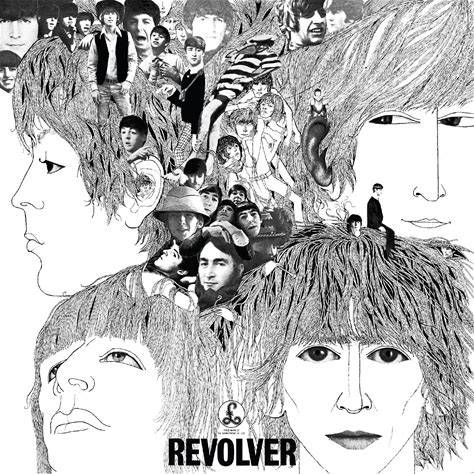
When you do access an original, try to see the thing itself, as it might have looked in its time. Read the Declaration of Independence like it’s about to be angrily mailed to the king of England. Put on Revolver like it’s 1966 and the last Beatles song you remember is Ticket to Ride. Then think about that guy you know who says they’re overrated.
If you focus on the original, almost always you will find something profound, and it’s never quite what you’d guess. There’s a reason every great original has moved so many human hearts: it’s so good that pundits can’t convey its magic to you. If they could, they would have made it themselves.
***
Want to break a habit?
The Raptitude Renunciation Club is a community where we give things up for 30 days at at time. We do it to break habits, get healthier, or focus on more important things.
The most common renunciations are sweets, alcohol, and doomscrolling, but you can do anything you want. It’s totally free.
Get healthy. Save money. Sleep better.

 I'm David, and Raptitude is a blog about getting better at being human -- things we can do to improve our lives today.
This is why I never read the introductions to books before I read them. I just read Moby Dick for the first time, and someone asked if I was joining in some podcast where every chapter is dissected and set in its historical place before you read it. Nope. I just jumped in and read it as a novel, not as an icon of American Literature.
It was GREAT by the way, highly recommended. Much more humor than I expected, and language like poetry. Maybe when I read it again I’ll look at the intro.
Oh man those introductions! They go on and on. They often assume everybody’s read the book already and even spoil it sometimes.
I loved Moby Dick. I don’t know what I expected but it wasn’t that!
This happens to me with paintings, first time I saw American Gothic at Chicago Institute of Art about fell over. Had no idea it was such a great work of art.
Same. That happened to me with Monet at the Met. I didn’t “get” impressionism until I saw their physical canvases.
American Gothic is one of those cultural icons that is known almost entirely from parodies.
I visited the Vatican in 2008 when my son did his Junior year abroad. Walking through the Papal apartments on our way to the Sistine Chapel, I came upon Raphael’s “School of Athens.” It floored me. The guide had to keep calling me to keep up with the group, but I couldn’t leave it, soaking it all in.
I’d seen it depicted many times before and since, but viewing it in situ and the feeling I had still sticks with me today.
When I read this post, my thoughts went to the Art Institute as well. (I was in Chicago in 2017 as part of a trip to Carbondale, Illinois to see the solar eclipse.) Spent most of my time in the modern art wing of the building and found myself face to face with Piet Mondriaan, René Magritte and Salvador Dali. My mouth just dropped open when I wandered into a room and found a real live Mondriaan, squares and lines and all, right there on the wall in front of me.
Similar experiences right here in Winnipeg when I came across a Lawren Harris painting at the WAG, and the first time I heard the Symphony play Beethoven’s 9th.
Ah I did not know the name Lawren Harris but this style is so familiar — I feel like I’ve seen some of these so many times, I assume as part of the WAG’s permanent collection. That narrow hallway with the permanent stuff is my favorite part of the WAG.
This happened to me with of all things the Grand Canyon. I’d seen so many pictures of it in varied mediums throughout the years. Absorbed all the wondrous commentary so much that I was ambivalent about actually going there. Especially everyone saying-but you MUST see it in person! Really? I feel I have at this point! Then I finally stood at the edge of the north and then the south rims and realized ohhhh, I get it now! Seems obvious but it wasn’t to me. This was an awakening to how much else I’d formed similar opinions about. I’m still prone to it but how can we not be, everything is so filtered! Regarding the news though, I never could stand the newscasters repartee, I avoid it vehemently!
I also assumed that I knew what the Canyon was before I saw it. But seeing it in person blew my mind. That experience was a big part of the reason I moved to Arizona that same year.
What other assumptions have I made?
Thanks for your thoughts.
We visited the Grand Canyon one December, what an experience, on the south rim it was cold and starting to snow – so wonderful until…..
The park rangers came round telling everyone to leave or we’d be snowed in. The experience cut short but I’ll never forget the drive out.
I really want to see the Grand Canyon. Whenever I think of it I think of Clark Griswold from National Lampoon’s Vacation calling it the world’s second biggest hole. I’d like to replace that image with the real thing
I had this happen when I saw the Parthenon for the first time. I must have seen it dozens, ?hundreds of times in history textbooks and websites about Greece, but it wasn’t until I was standing in front of it did I really experience it: the sense of awe, of grandeur, of history being RIGHT THERE! You can actually see the spot where an Ottoman cannonball hit one of the columns!
Wow, just wow.
I have to go to Athens
❤️❤️❤️ this, David, it is so right on!
I just read The Bostonians (Henry James) in an edition published in 1992 and purchased in a used book store. I ignored the introduction at the front. It took a long time to finish — one does not speed-read Henry James — and I enjoyed every page, without someone else’s impression messing up my reading.
Your comment on Eine Kleine Nachtmusik brought me back to one great memory: it was during “les Grandes Fêtes de Nuit” in the gardens of Versailles. The night was warm, the fireworks were on and I came upon a chamber music orchestra and they started playing the piece. I was transfixed.
Oh my goodness, this is so spot on for me right now…it’s like your essay just collated all my thoughts!
Thanks so much and I will spread the word – be, go, think the original.
So much better!
Growing up in the late 90’s and early 2000’s, my kids learned most of what they knew of American politics from the Simpsons.
FYI we live in Canada
This is spot-on. If I go see a movie, a play or a musical (all of which I love), I make a point of not reading reviews beforehand. I try to get a general sense so I don’t end up in shows that upset me (like really violent things). But I aim for a blackout until I’ve watched, then I might read some reviews and think over my reactions.
I also like to go to galleries and “visit” my favourite paintings. Like Monet’s paintings in the Musée de Orsay or Will Longstaff’s Menin Gate at Midnight in Canberra. Just reminding myself that the original has properties that a mere photo or online thing won’t capture. Just like friends! I think it’s good to treat these class of things as friends that you have to get to know over time, whether the Sydney Opera House or a Henry James’ novel!
I do that too. I try to build walls around what I’m seeing, which is really a matter of staying in the moment and just looking at it. Even looking at a famous painting I try to just look at this thing on this wall, not as a thing I know anything about.
Over thirty years ago my boyfriend (now husband) and I were yard sailing (that’s how I think of it, going where the wind blows you) and we bought a mono turntable and a handful of records. It was a bout a gazillion degrees and humid as heck, and we went back to my hot little apartment, lay down on the floor and listened to Bob Dylan’s first record, in mono, just the way folks heard it in 1962. I’d heard those songs a hundred times before, but not like this. Suddenly I could feel what (maybe?) folks felt when it first came out. It was amazing.
Growing up sheltered and in Germany, the Simpsons image resonates: That’s how I had my first encounters with so many cultural touchstones. Not just the quick throwaway jokes, but also the deeper meanings.
Oh, and of course, Mickey Mouse magazine with its adaptations of classical works. Who’d have thought Donald Duck makes a great Othello?
I think many of us non-Americans got a lot of our education about American society from the Simpsons :)
Creative people are experiential. It’s our nature and worthy soul food (Moon-led). People born at night feel their way thru life, and are more likely to want to chew new and different types of gum, for their experience.
Sun-led people who are born during the day (Sun is visible in the sky) are usually time-driven and demonstrate a planned approach to life. These are the people who want shortcuts to get somewhere faster. They don’t tend to chew gum for the experience.
As a person who grew up in dominating and controlling Sun-led environment, I’ve had to defend my gum chewing to many people over my life. One case in point, the Gaffney Peach Water Tower in South Carolina. Yes, it’s a water tower painted like a Sunburned bum but I wanted to see it. (Same reason I went to Winnipeg and we had coffee at the Forks).
We know the saying, opinions are like a body orifice, everyone has one. As you allude, it doesn’t take any effort, blood or sweat, spiritual investment, enduring commitment, endless passion, guts to get back up no matter how many times you’ve been punched in the face by life, to have an opinion.
But when you’re training the world not to think, ignore context, perspective and nuance, turn only to the materially-wealthiest, shinest, overtly-sexual, aggressively-offensive or loudest voice in “THE room”, it breeds the outcomes we’re unwillingly (for most of us) receiving.
It’s a good thing that classic, analog pursuits are making a comeback (for growing share of people). I AM very encouraged by the quality of long-form human-generated (text) opinion pieces I can read from real depth of character, worthy and spiritually-aligned perspectives. I always hope for more (!).
Thank you for your willing and very worthy service.
I felt this when I finally saw a Rembrandt painting in person. I thought it was a boring painting I had seen a hundred times on postcards but when I was in the presence of the original, I was blown away by the light and texture in it.
I have favorite paintings now that I have visited in person.
I also stopped watching TV in April of 2020. It is mostly pure propaganda, with the exception of a few nature documentaries. Total waste of time.
I had a similar reaction to not just Rembrandt but portraits in general when I visited the Met. Portraits held no interest for me until I saw the same images on canvases live. The great ones feel like the presence of a person, traveling through time, but none of it comes through in photos.
You are hitting here on the central question of one of the greatest essays ever written, “The Loss of the Creature,” by existentialist novelist Walker Percy:
“How can the sightseer recover the Grand Canyon? He can recover it in any number of ways, all sharing in common the stratagem of avoiding the approved confrontation of the tour and the Park Service.
“It may be recovered by leaving the beaten track. The tourist leaves the tour, camps in the back country. He arises before dawn and approaches the South Rim through a wild terrain where there are no trails and no railed-in lookout points. In other words, he sees the canyon by avoiding all the facilities for seeing the canyon. If the benevolent Park Service hears about this fellow and thinks he has a good idea and places the following notice in the Bright Angel Lodge: Consult ranger for information on getting off the beaten track—the end result will only be the closing of another access to the canyon.”
I will find this and read it, thank you
In 1975 I was 18 and touring Europe with a group of other kids. As we got off the bus at the Leaning Tower of Pisa we all said “it’s really leaning!!”. I was lucky to realize at a young age that some “tourist traps” are still very much worth seeing.
Brilliant, as always, David.
Among the magic opportunities we experienced: first visit to Zion National Park in 1998 (before it was overwhelmed).
Due to a flood that destroyed our car a few weeks before we stopped being adults, took early retirements and hit the road for ten years, we bought a used small red convertible to tow behind our RV. Spent days top-down, driving around, looking up. Through joyous tears, I understood. Still feel the chill in my soul while writing this.
The Chief Crazy Horse Memorial near Mount Rushmore is the closest man-made sculpture that deserves comparison to Nature’s wonder of Zion. Twice a year, it’s open for people to walk on; unfortunately, our timing was off.
Still on our list of “impossible possibilities” before we die.
i live in tanzania and only last year visited the Ngorongoro crater. the original trumps the descriptions any day of the week
Comments on this entry are closed.