I keep reading books from the 19th century and earlier, fiction and nonfiction, because I envy something about the lives of the people in them.
I don’t think I’d want to trade places. I’m too accustomed to hot showers and modern dentistry. But people back then seemed to live with a certain straightforwardness we no longer have. They could more easily just do a thing, more easily pick a course of action and see it through.
Now I think I know why: regardless of their class, those people had relatively few options in every area of life. There were fewer things they could do, fewer things they wanted to do, and fewer things to think about. Naturally, whenever they made a choice, they acted on it with more care and conviction, with relatively little to distract them from it.
Picture an 18th-century farmer’s son, at thirteen years old. His older brother will inherit the farm, so he needs to think about potential vocations. The family knows a blacksmith and a tanner in the next town, so those are two potential apprenticeships. He also may be able to get into the seminary, if he impresses his local parish priest. Failing these, he can help his brother or join the army.
Three solid options, and some backups. He will keep these options open until one emerges as best, then focus his efforts on making the most of it.
He can’t wait till he’s 23 to decide. He isn’t working on a crime novel, he doesn’t concern himself with international politics, and he definitely isn’t going backpacking in Southeast Asia. Those aren’t necessarily bad things, but the ability to pursue them would probably only inhibit him from making the best of his options, whatever they happen to be.
The average modern American, by contrast, has – I don’t know – something like five hundred opportunities as good as our farm boy’s three. You could become a dental hygienist, a land surveyor, or an insurance broker with less effort and investment than that kid would need to become a blacksmith. You could also become a chef, a naval officer, a writer, a YouTuber, a dog-walker, or hundreds of other things. You could even become a blacksmith more easily than him.
You could learn how to put yourself onto any of those paths, in a single afternoon, for free. A determined person could easily contact people in those fields and get their questions answered. Resources and information are so abundant that you could start many of these paths even in your 30s or 40s and still achieve them. You can even take courses from Harvard for free while you wait for the bus.
Each of these options is a blessing in its own right. But having hundreds of them is actually crippling. It would be better to only have ten or twelve. All day long, we have endless possibilities for where to put our attention, so it becomes so much harder to make the most of a given life-path. A human life is still only made of 24-hour days; whatever your aspiration, it can only withstand so much diversion, so much irrelevant doing and thinking, if it’s going to succeed.
And it isn’t only in careers or life-paths where we experience this flood of options, it’s at every decision-point: how to entertain yourself, what to eat, where to live, what to believe, what to wear, what personal goals to take on, and especially what to think about.
Every time we try to do anything with some resolve, many shiny alternatives appear. The more alternatives there are to what you’re doing, the more resolve you need to keep doing it. Whether you’re picking a movie on Netflix or triaging your to-do list, there are dozens of viable roads into the future, and all of them have offramps every two seconds.

That’s where our farm boy has a huge advantage. He has fewer opportunities, but he’s far less liable to squander his best ones – and what good are even a hundred opportunities if you don’t make the best of any of them?
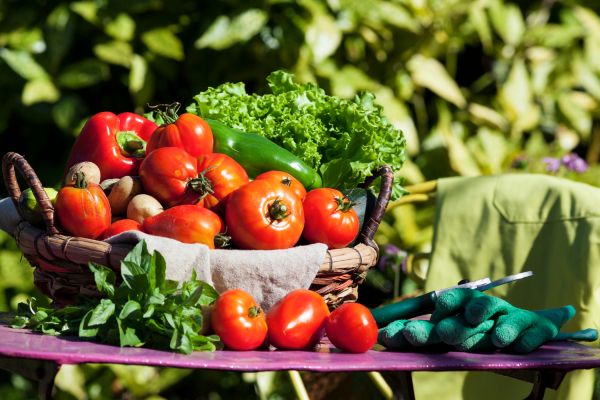
The main problem with the options-flood is not just the indecision, overwhelm, and grass-is-greener syndrome it causes. It’s that the loudest and most attractive ways forward will win most of the contests for your will and attention — it’s always the weeds, not the vegetables, that dominate an overgrown garden. Sure, you have the option to virtually attend Harvard over the years while you wait for the bus. But you can also do a thousand easier and more fun things on your phone, so you what do you end up doing?
Stick your head in a box
In all likelihood we’ll live our whole lives chest-deep in the options-flood.
Avoiding your devices helps, but you still have a mind loaded with concerns about foreign conflicts, public figures whose actions you cannot in any way affect, celebrities you will never meet, neglected hobbies, and other fruitless diversions. Basically, if you survived to the 2020s, you have ADHD now, if you didn’t before.
I used to think you could self-improve your way out of this situation. Ironclad discipline, if you could develop it, could keep you focused on your best courses of action. But even 4th-century desert-dwelling monks didn’t trust self-discipline to save them, which is why they lived in caves and tried not to even see a city, or food more exciting than bread.
And we are much more afflicted by diversion they could ever have been:
What I try to do now is make hard boxes around single intentions. I reach into the sea of possibilities – my huge to-do list, my bulging folders of sketches and ideas – and select one thing, one possibility.
Then I draw a mental box around that thing and pretend, for at least the next half-hour, that I live in a very small universe, a constrained, peasant-boy world where there’s only this one thing to do and think about.
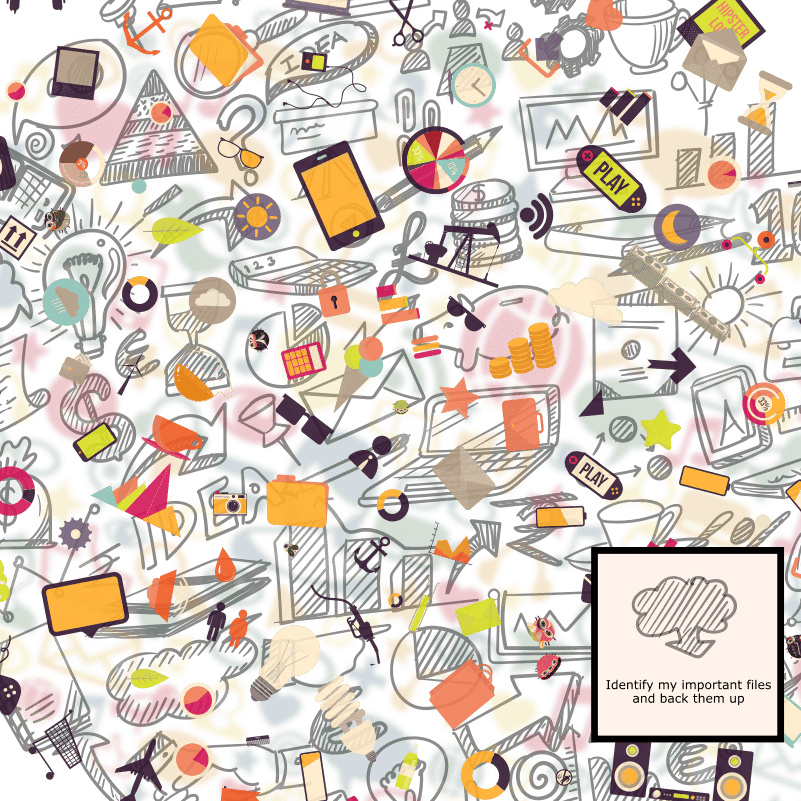
I stick my head in that box and ignore the everything outside it, dedicating a small piece of time entirely to advancing that one thing, with zero tolerance for diversion. No other intentions are allowed.
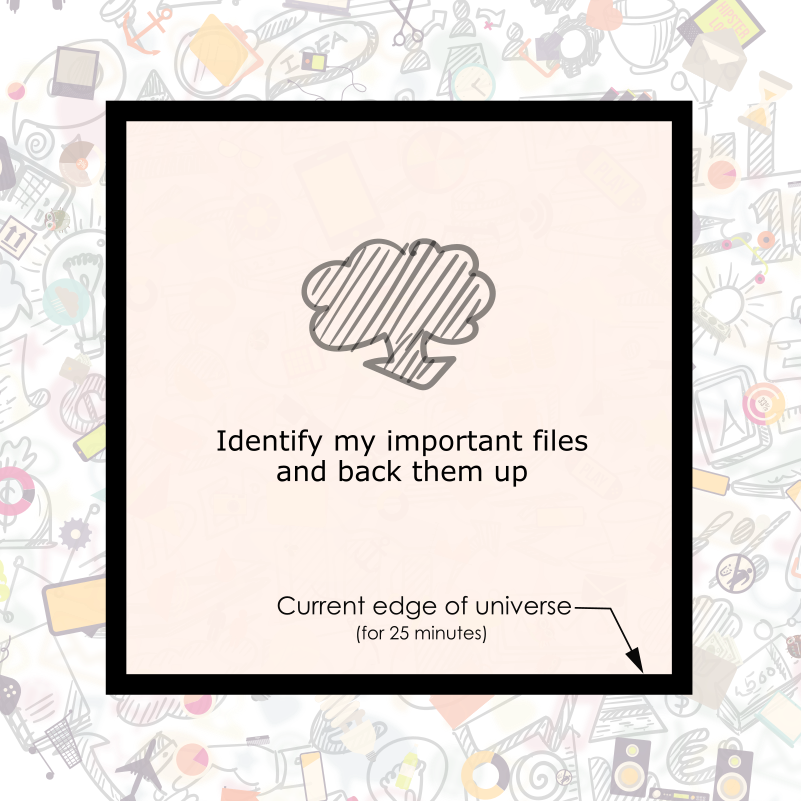
I then repeat this universe-in-a-box scheme three or four times and then that task is done. Then I make another box.
Free “boxing” lessons
I’ve just released a free mini-course on doing things this way, called Fix One Thing. You pick an outstanding task from your list, maybe one you keep putting off. You draw a box around it, and deal with it completely.
The course itself is small and fits naturally in little boxes. Three emails in three days. Get that one thing done, then repeat the process on some other thing. You could make your way down any life-path this way, box by box, reasonably protected from the currents of the options-flood.
It’s almost – not quite – a way to enjoy the farm boy’s clarity of purpose while taking advantage of modernity’s abundance of possibility.
Sign up here and I’ll send it to you.
***
 I'm David, and Raptitude is a blog about getting better at being human -- things we can do to improve our lives today.
{ 0 Comments }