I sleep better when I don’t eat snacks after dinner, especially junky carbohydrates, so last week when I visited a friend’s house I made a specific resolution to decline all such snacks.
Sure enough, as though the scene was a moral fable I had written myself, I was at one point handed an open bag of Doritos. I then watched myself pull out a handful of chips and start eating them, while making a resolution for next time.
Later, when the Doritos were reduced to crumbly fragments barely worth fishing out of the bag, I reflected on what had gone wrong, and remembered something I discovered years ago about resolutions but forget constantly.
If aliens were to visit earth and observe us living our lives, perhaps what would baffle them most about our species is not our struggle to co-operate with each other, but our struggle to co-operate with our own selves. You’d think a sentient organism should at a minimum be able adhere to its own decisions — to leave in time to catch the early bus, to do the lunch dishes right after lunch, to refrain from eating the entire sleeve of Oreos, especially after making explicit vows to do precisely those things because they make perfect sense.
For whatever evolutionary reasons, part of the game of being human is to wrangle ourselves into acting out the choices we’ve already determined are the right ones, and the resolution is our first-order tool for doing that. You make a promise to yourself – whatever that means exactly — that you will indeed do the thing you worry you won’t do. I will start the term paper the day after it’s assigned. I will not read the comments beneath news articles. I will wave away the Doritos bowl when it comes around.
There may be people for whom these sorts of bare resolutions do work reliably, and I assume these people become astronauts, pro athletes, and heads of state. For the rest of us, the resolution is a comically ineffective tool for changing course.
Read More
My junior high English teacher laughed involuntarily when one of my classmates teased, “Don’t you wish you were our age again, Mr Harvey?”
He was a polite man but he laughed at her comment for a long time. “This may surprise you,” he said when he was able to speak again, “but no grownup wants to be fourteen again. I’d go back to twenty-five in a heartbeat, but not fourteen.”
My fourteen-year-old brain found it interesting that Mr Harvey did have a preferred age, and that it was somewhere between fourteen and his current age (late forties, I guessed). It meant there must be some important quality that disappears after a certain time and then you want it back.
At that age I don’t think I knew that feeling yet — of yearning for some unrecoverable quality of the past — but I was familiar with the concept. Adults seemed to refer constantly to the Good Old Days, when this or that, or everything, was better. Cars. Presidents. Music. I watched the whole run of The Wonder Years, a TV show about exactly that sentiment.
I think I even remember our valedictorian, a few years later, including in his address a famous line from Mary Schmich’s “wear sunscreen” monologue — “You will not know the power and beauty of your youth until they have faded.” I probably nodded at this remark, assuming its truth but still only able to imagine it.
Read More

As most of you know, I just took three days completely offline so that I could discover what would be difficult about it.
I have so much to say about that three days, and first thing I would like to report is that there was almost nothing difficult about it.
To my surprise, I didn’t crave the internet at all. I wasn’t dying to check email, judge people on Twitter, or figure out the day’s Wordle. Instead I did my daily work — very little of which requires the internet, I discovered — and simply lived life in the physical world.
This simplicity was disorienting in a way. Many times a day I would finish whatever activity I was doing, and realize there was nothing to do but consciously choose another activity and then do that. This is how I made my first bombshell discovery: I take out my phone every time I finish doing basically anything, knowing there will be new emails or mentions or some other dopaminergic prize to collect. I have been inserting an open-ended period of pointless dithering after every intentional task.
With my phone parked in a cardboard pouch taped to my kitchen wall, this ritual was unavailable, so I again and again found myself hitting a kind of intentionless vacuum, where nothing would happen until I consciously formed a new intention to get on with the day, in a way of my choosing. I can’t convey the strangeness of this feeling — it was like repeatedly discovering that I had misplaced my cane again, only to remember I can walk just fine.
Read More
In a recent online discussion, several peers made a simple claim I want to test out: when you take a break from the activities you know are eroding your attention span—mostly phone and internet habits–you notice it improving after only a day or two.
My attention span has certainly worsened over the last ten years (especially the last two), and this worsening seems to correlate with how much I use the internet. I presume it is a two-way relationship—a shredded attention span makes it more difficult to absorb yourself in offline activities, which makes online activities more appealing, and so on.
I immediately began planning the simple experiment of staying offline for three days, and quickly realized that such a break would just create a speedbump, not a lasting change. I could see myself dumping my laptop in a drawer, blocking my fun phone apps for 72 hours, then catching up on my missed messages and Wordle puzzles on day four, essentially rebounding me right back into always-online mode.
Read More

One financial lesson they should teach in school is that most of the things we buy have to be paid for twice.
There’s the first price, usually paid in dollars, just to gain possession of the desired thing, whatever it is: a book, a budgeting app, a unicycle, a bundle of kale.
But then, in order to make use of the thing, you must also pay a second price. This is the effort and initiative required to gain its benefits, and it can be much higher than the first price.
A new novel, for example, might require twenty dollars for its first price—and ten hours of dedicated reading time for its second. Only once the second price is being paid do you see any return on the first one. Paying only the first price is about the same as throwing money in the garbage.
Likewise, after buying the budgeting app, you have to set it all up, and learn to use it habitually before it actually improves your financial life. With the unicycle, you have to endure the presumably painful beginner phase before you can cruise down the street. The kale must be de-veined, chopped, steamed, and chewed before it gives you any nourishment.
Read More
In 2021 I began to dissect my lifelong problem of severe procrastination, instead of just wrestling with it.
I used to see it as a simple character flaw, a ball and chain hanging from my wrist as I tried to fulfil life’s requirements. Now I think of my capacity for getting things done (or not) more as a semi-functional Rube Goldberg machine. Instead of metal chutes and springs, its parts are interconnected habits. It runs smoothly in some places, gets hung up in others, and all of the parts can be studied, understood, and adjusted.
One thing that helped a lot was distilling my observations about the machine into a dozen or so single-sentence “laws” that describe how productivity and procrastination seem to work, at least for me.
It was intended to be a personal reference, taped to the wall near my desk, but every time I look at it I realize other procrastinators could benefit from some of it.
Read More
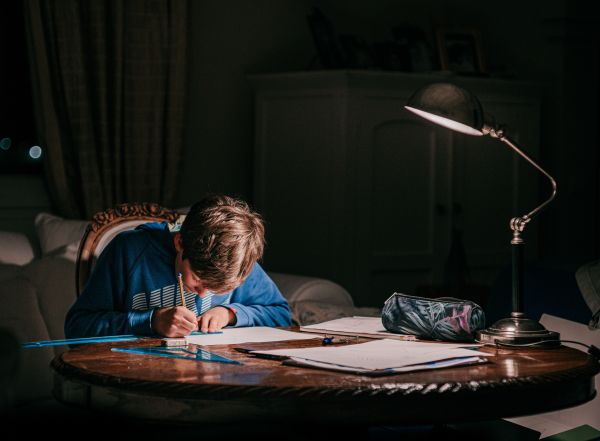
I’ve never had great penmanship, but one day in grade four it went from atrocious to merely eccentric after receiving a single piece of advice from my father.
I had already received frequent advice on the matter from my teachers. Pay attention to what you’re doing. Don’t get frustrated, just make each one a little better. Practice, practice, practice.
My dad’s advice was much more specific: try to make the bottom of each letter touch the blue line.
This made for an immediate improvement, because it made it clear what to do differently—get the loop of the “b” and the trunk of the “t” to meet the cyan lines, rather than float somewhere above them.
The advice of my teachers was still valid, despite being all clichés. You probably can get good at almost anything by doing it repeatedly and paying close attention, while trying to improve on each repetition. That’s probably how Larry Bird got good at basketball.
In fact, some of the best advice comes in the form of clichés. Be yourself. Seize the day. Fake it till you make it. Despite how trite these phrases sound now, they are still deep, paradigm-shifting insights about being human. They’ve undoubtedly changed countless lives, which is how they became trite. Precisely because these principles have been discovered and expressed many times, in many contexts, they’ve become too general and too familiar to revolutionize how someone does something.
Read More
This summer I released the book I had always wanted someone else to write: a guide to getting things done that wasn’t written by a high-achiever, but by someone who has always struggled to reach “average” levels of productivity.
It would be short enough to read in one sitting and implement the same day. It would contain a single, focused method of getting stuff done, which you would know by heart by the end of day one.
I called this book How to Do Things: Productivity for the Productivity-Challenged. It was sort of a two-pronged experiment.
First, could I convey my own idiosyncratic method of getting stuff done to the general public, and would they find it helpful?
Second, and more importantly: could a 35-page book be better at teaching you something useful than a 235-page book?
Read More
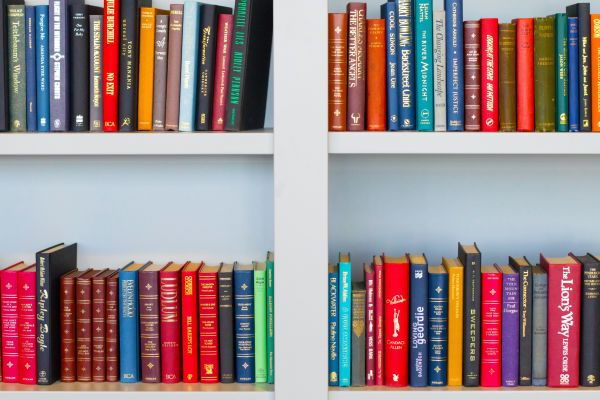
I’m 41 now and finally learning to read.
Getting through novels is something I’ve always found extremely difficult. As much as I enjoy a good story, most of them seemed to take forever get to the straightaway – the point in the book where I no longer had to effort my way through the pages.
A few rare books would grip me from the beginning, and I’d finish them a couple of days, with no difficulty whatsoever. Perhaps a tenth of the time, I’d hit the straightaway after a hundred pages of dutiful slogging. The other ninety percent I would ultimately abandon. Almost everything in my bookcase has a bookmark sticking out of the top somewhere near the front cover.
There are few things I’ve wanted more than to be able to pick up a big book and read it in two weeks, like an average reader. Most of the “how to read better/faster” advice really just tells you to spend more time reading – carry a book at all times, read on the bus, read in the shower.
That seems to be the usual advice for getting better at anything, really: do more of it. People who are more skilled have simply done more of that thing. No amount of volume seemed to address my problem though. I “plugged away,” as advised, for 30 years, and the problem remained.
Read More
William Irvine, an author and philosophy professor I’m a big fan of, often tries to point people towards a little-discussed fact of human life:
You always know when you’re doing something for the first time, and you almost never know when you’re doing something for the last time.
There was, or will be, a last time for everything you do, from climbing a tree to changing a diaper, and living with a practiced awareness of that fact can make even the most routine day feel like it’s bursting with blessings. Of all the lasting takeaways from my periodic dives into Stoicism, this is the one that has enhanced my life the most. I’ve touched on it before in my Stoicism experiment log and in a Patreon post, and I intend to write about it many more times in the future (but who can say?)
To explain why someone might want to start thinking seriously about last times, Bill Irvine asks us to imagine a rare but relatable event: going to your favorite restaurant one last time, knowing it’s about to close up for good.
Read More
 I'm David, and Raptitude is a blog about getting better at being human -- things we can do to improve our lives today.
great post. my experience with bucket lists improved after reading: dying with zero. it said you have to have buckets for every decade of your life, just to make sure you are doing first things like mountain biking, that require youth, and old people stuff like reading last. however,...