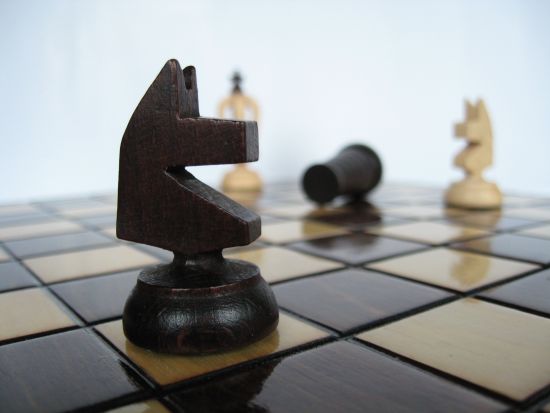
In serious chess games, every move is written down. That way, every choice made by either player can be analyzed, by anyone, even centuries later.
The notation itself is very concise. Bh4. Nxd5. The Bishop moves here. The Knight captures the pawn there. A whole game can be reduced to a paragraph the size of a newspaper classified ad.
In chess books, analysts will sometimes annotate certain moves with praise or criticism. To indicate an exceptionally good move, they add an exclamation mark. Nxg6!
To a chess nerd, the “!” is very exciting. It means the move wasn’t just good, but that it gained more for its player than seemed available at that moment.
The exclamation mark signals a hint of genius — a moment in which a player sees through the position’s usual pitfalls and predictable struggles, and puts them behind him with the single push of a pawn. Boom! With a sudden punch out of nowhere, the game has changed.
On many occasions, I’ve witnessed people do things in real life that seemed clever and unexpected enough to deserve a “!” -– simple, right-to-the-bone power moves that cut through the struggles and stalemates one might have expected.
Read More
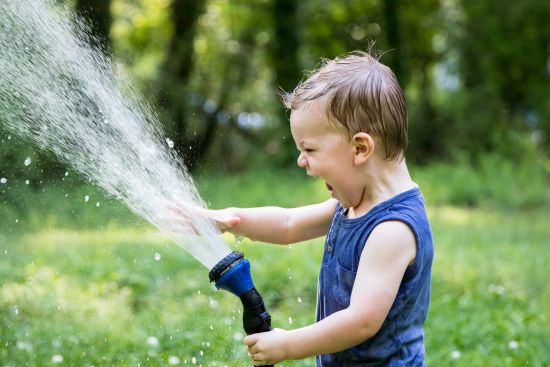
Our family had a cat named Princess, who at some point developed a fear of the front lawn. She would never quite walk across it. Instead she would creep up to its edge, wide-eyed and serious, then dart across.
My dad guessed she had once been in the wrong place when the sprinkler came on. Like most cats, Princess found it excruciating to be touched by any amount of water, unless it was her idea. A single raindrop would send her fleeing for cover, yet she would also wait at the bathroom door for you to emerge from your shower, then push past you to investigate the leftover puddles.
A cat’s non-negotiable stance towards involuntarily touching water illuminates what might be the most important difference between humans and other animals: we can overcome our own reactivity. We can learn what our impulses are, reflect on whether they’re helpful, and practice not always acting on them.
Read More
Kindergarten was only a half-day, so I spent a lot of that year at a babysitter’s house. She had two children, both older than me. One day, the son had a big white cast covered in signatures, and explained that he had broken his arm.
At the time I thought having a broken arm meant it had been broken off, like a tree branch. Casts held the arm in place while it grew back together.
I asked how much it hurt.
“A lot.”
“Did you cry?”
“Well, yeah.”
“Does it hurt now?”
“No, it’s just itchy.”
“When did it stop hurting?”
“I don’t remember.”
The sequence of events implied by his account blew my little mind. This guy fell off a jungle gym, looked around, and discovered his broken-off arm lying on the ground next to him. Then an ambulance came, and a team of doctors stuck it back on and encased it in plaster. It must have been a day of the purest pain and sadness, yet at some apparently forgettable moment, the horror went away, and now he’s joking around and it’s a normal day again.
I was then, and am still, fascinated by the way in which two incompatible experiences are still connected by time. You could be sad and despairing on a Monday morning, and be laughing that afternoon. In a matter of hours, the awfulness – real as it was – has somehow evaporated and been replaced by an entirely different experience.
Read More

Ordering takeout is an act of community support, the pleasure-seeking part of my brain has been telling me.
Every time I deny the impulse to order pizza, this brain-region argues, a local restaurant comes closer to insolvency.
The other day I was chatting with a few friends, and it turned out each of us had gained a non-negligible number of pounds over the past four months.
“It’s happening to a lot of people,” one friend said. “They’re calling it the ‘Covid Nineteen.’”
It’s only twelve for me, but the process is still unfolding.
Takeout isn’t the sole culprit, of course. It’s hard to remain as active these days. Fewer grocery sorties means less fresh produce in the diet. Also, general anxiety and uncertainty have a way of sending us wandering to the fridge, or worse.
I reached my enough-is-enough moment when I was notified that I’ve earned a free pizza from accumulating enough loyalty points. My plan is to halt the Covid Nineteen while it’s still a Covid Twelve, and give every bit of it back to nature.
Read More
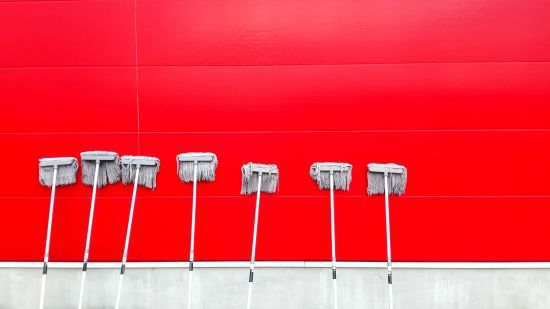
At some point in my house’s 112-year history, someone installed thick, white, nine-inch high baseboards that mostly act as highly visible shelves for dirt.
Whenever I try to clean these baseboards, I quickly get annoyed and discouraged. There are seemingly miles of them, running in and out of closets, behind furniture, and underneath power cords and dangling spider plants.
Unlike sweeping, vacuuming, or dishwashing, there’s no stable posture from which to clean baseboards. It’s always an act of ongoing contortion. Each obstacle interrupts the flow of what is already an awkward task.
The other day, however, I cleaned my office, including its baseboards, with none of the usual struggle. The difference was that this time I cleaned them without the entering the psychological state of trying to clean them. I skipped the whole idea of trying.
Read More
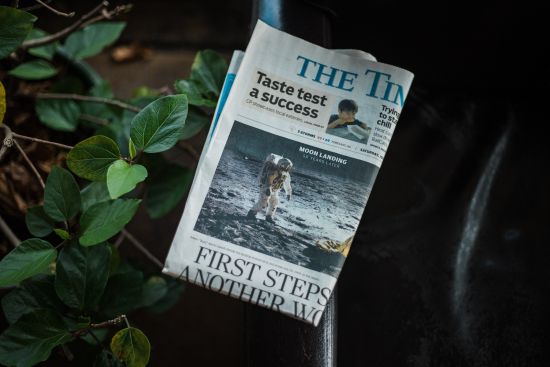
The eventful month of June 2020 seemed like the right time to add a new daily exercise to my mental health regimen: read an opinion piece that makes me uncomfortable.
I had noticed that in my online surfing, I was hunting for opinions with certain specific qualities. I would scan past headlines that struck me as too fawning, too reactive, too woke, or too conservative, until I found one that looked like it was “worth my time,” or “had something to say.”
It soon became clear that I was looking for the most palatable opinions, which of course are my own opinions.
Ideally, I would find my views expressed by a professional columnist with a kind of cutting wit I would like to have. When I found a piece that met these narrow standards, I would read, enjoy, and share it, then repeat the process.
Read More

Throughout my life I’ve occasionally had spells of a few weeks or months in which I don’t feel great: I seem to have low energy, brain fog, a lack of optimism, and indecisiveness. Sometimes it’s only a day or two.
There doesn’t need to be some life event that triggers this compromised state, so it’s hard to know what to fix. In this state I don’t quite know how I’m doing, only that some things feel off, and getting ordinary things done seems inexplicably difficult.
I hope you’re doing okay on this particular day of your life. But in case you’re not, I want to share something that has helped me move through the murk, even though I don’t know what the murk is exactly.
Read More
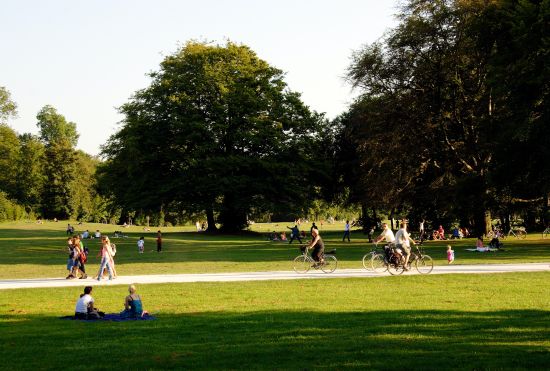
My friend said that wearing a mask added an unexpected challenge to her grocery shopping experience: nobody can see you smile.
She had always depended on a polite smile to smooth over shopping-cart traffic jams and accidental incursions of personal space, and now this versatile social tool was unavailable.
I discovered a similar problem on my first silent retreat. I had a habit of saying “Oh, sorry!” whenever I thought I might be in someone’s way, but we’d all taken a vow of silence, so I couldn’t. I felt like a wrecking ball.
In the end, my friend determined that it didn’t really matter, because people can somehow sense your attitude towards them, even without obvious visual cues like smiling. All that’s ever needed is genuine goodwill, even if it isn’t coming out of your face.
Read More
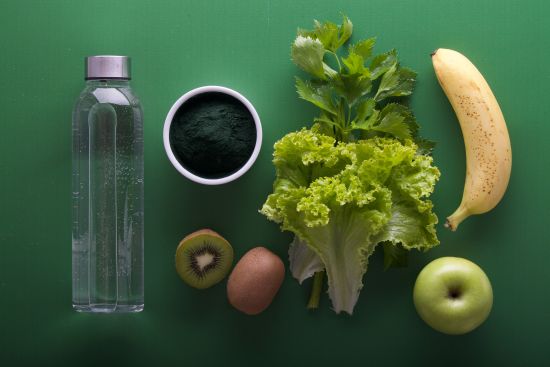
When quarantine started, I imagined my day would remain more or less the same before 5pm, because I already worked from home.
To the logical part of my brain, this was a simple algebra equation. My nine-to-five life stays constant, and my social life and errand-running would be replaced by their awkward and sometimes challenging COVID-era versions.
Two months later, the after-work stuff is running smoothly. My social life is fulfilling enough, on a rich diet of phone calls, one-on-one walks, and Zoom gatherings. I’ve become far more efficient at grocery shopping. (Why did I go so often before?)
Achieving an ordinary workday, on the other hand, has become uncannily difficult. Whatever I’m trying to do – write a blog post, return an email, tackle a website bug – it feels like I’m moving through mental molasses.
Read More
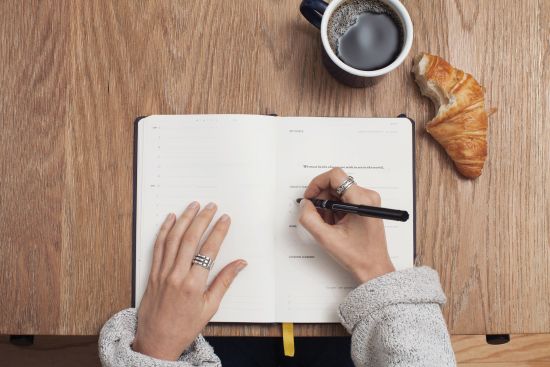
If naturalists were studying me in my home, they’d quickly recognize my natural migratory cycle. I’ll work in my home office for several months, until my desk accumulates a horseshoe-shaped wall of unfiled papers and half-read books. Then I’ll move my laptop to the kitchen table and stop going in my office at all.
In the kitchen, whatever good habits I had start to break down. I begin work later, get less done, and interrupt myself more often. Each time I attempt to get something done I can feel the encroaching undergrowth of every other unstarted or unfinished project. A certain psychic encumbrance descends on my mind. Everything I do feels like it’s not the thing I need to be doing.
This spiral worsens for a month or two. At some point, I get fed up with everything being such a slog. I spend a day clearing my virtual and actual desktops, and the cycle starts anew.
Read More
 I'm David, and Raptitude is a blog about getting better at being human -- things we can do to improve our lives today.
great post. my experience with bucket lists improved after reading: dying with zero. it said you have to have buckets for every decade of your life, just to make sure you are doing first things like mountain biking, that require youth, and old people stuff like reading last. however,...