
On the wall of my office I put up a Tolstoy quote in 32-point text:
A man on a thousand-mile walk has to forget his ultimate goal and say to himself every morning, ‘Today I’m going to cover twenty-five miles and then rest up and sleep.’
I find it much more instructive than the standard “big things happen gradually” clichés: Rome wasn’t built in a day, a thousand-mile journey begins with a single step, how do you eat an elephant (one bite at a time), and the rest.
Tolstoy’s twenty-five miles is like the serious version of those throwaway adages. It’s for the person who genuinely wants (or needs) to cover a thousand miles, rather than just have another way to say “Oh well” after a disappointment. When someone says, “Rome wasn’t built in a day,” it implies that Rome will get built eventually by the way you’re going about things now, but there’s no reason to believe it works like that. Romes don’t get built very often.
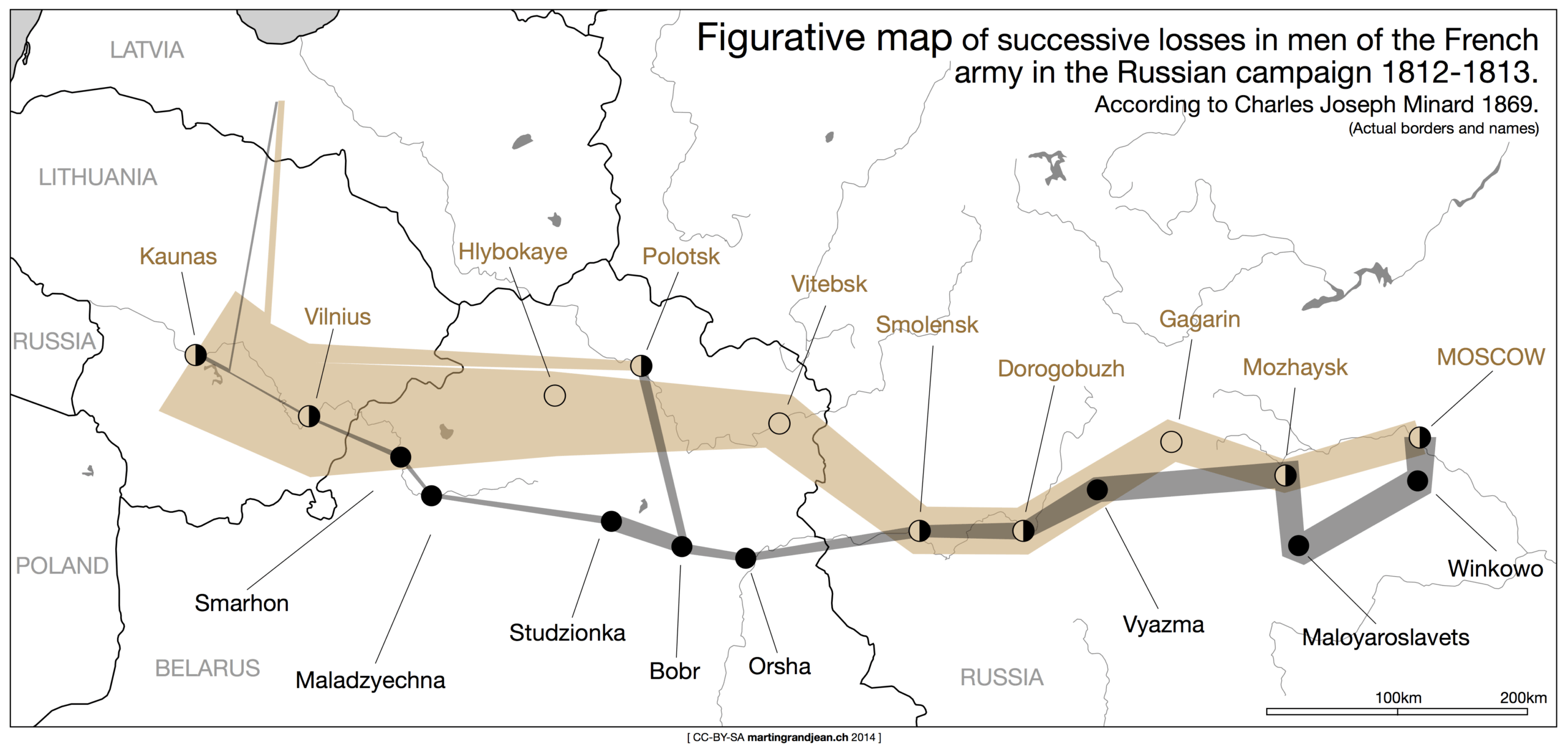
Covering twenty-five miles is a serious day’s effort, even though it’s only a tiny fraction of a thousand. It takes a real push, but it is doable, and days like that will add up to vast distances quickly. Note that Tolstoy was talking about hardened French soldiers crossing the Russian steppes; we can scale that twenty-five-mile march down to “A real effort you could achieve daily, but which you’ll only bother with if you’re serious about getting somewhere.”
We should consider bothering with it, because the thousand-mile trek is a thing humans have to do sometimes. They come to us both voluntarily and involuntarily. You might take on an ambitious project, like building an organization or writing a book. Or fate might plunk a long march in front you – cleaning up a huge mess, recovering from serious illness, or paying for some great mistake.

For each such trek, the twenty-five-mile day will be something different, but it’s always a day with a clear standard that requires a push to meet it. It might mean spending the first three hours of each weekday drumming up clients until you’re in the black. It might be yet another day of dutifully rehabbing your injury, achieving a caloric deficit, or staying sober.
To make those days happen one after another and eventually get to the end, you can’t stay fixated on the final destination, or you’ll go crazy. Compared to a thousand miles, twenty-five can seem like nothing. You trudged all day in the cold, and the city won’t even be on the horizon for another 960-some miles. Through great effort, you’ve gone an inch when you have to go a yard.
Considered on its own, such a day is really something though – forty of them gets you to a thousand miles. Those kinds of days (and not even that many of them) really do get the company going, get you to your target weight, or get you past a difficult chapter of life.
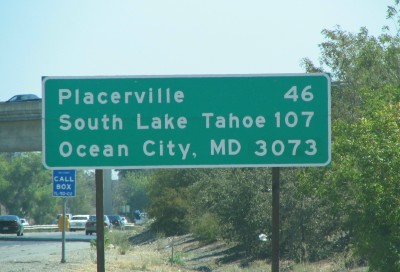
What Tolstoy is saying is that to have days like that, your focus must stay on this side of the horizon. The prize can’t be out of sight; it has to be reachable today. When your heart is set on a campfire and canned beans end of the day, you can make it. When it’s set on some unseen thing beyond the mountains, your moment-to-moment efforts will be mostly discouraging.
If you joined a gym in January, especially if it’s not for the first time, you may have already discovered this. You cannot sustain a consistent fitness regimen by thinking about how fit you’ll be six months from now. It might help you for the first session. But when it’s day four, and you’re on the treadmill, lungs burning, watching that red digital timer absolutely crawl from 23:00 down to 21:35, imagining some mythical lean version of you is not going to drive you through the next 21 minutes. It might just make you quit.
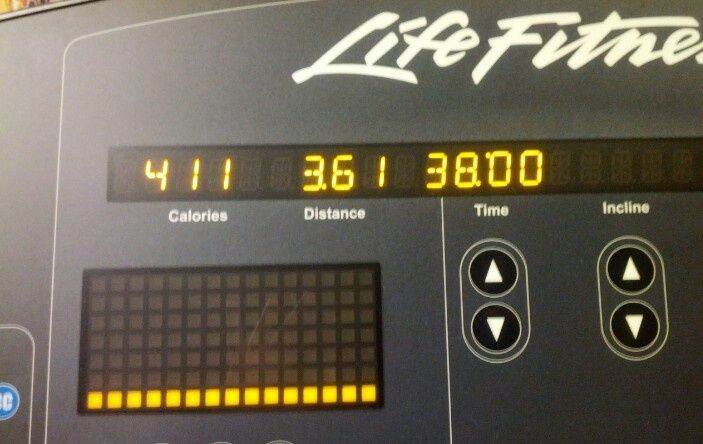
This is because from the long perspective, there aren’t only 21 minutes left, there are six months left. And nobody can run on a treadmill for six months, certainly not you.
When you make it your goal – i.e. the best thing you can do — to hit your (figurative) twenty-five miles and rest up, your goal becomes thing you can do. It takes effort, but it’s a choice, not a hope.
The ultimate, thousand-mile-away goal remains relevant, but it can mostly be treated as a map and compass, to keep you creating your twenty-five-mile days in the right direction. It’s not the thing you’re aiming at when you’re getting out of bed, or when it’s mile 15 and you want to quit. You’re trying to get to the next camp and enjoy those beans by the fire. You wouldn’t try to do six months of exercise at once with your body, so you shouldn’t try to do it with your mind.
When I focus on covering the day’s miles and resting up, I get somewhere. When I try to conquer my great personal challenges, I get nowhere. I think the difference is as simple as this: going twenty-five miles is a thing a person can get their mind around, and therefore choose to do, and going a thousand miles isn’t.
So instead of trying to eventually become the person who did the Big Thing, you can immediately become the person who makes their twenty-five miles and rests up for the night.
The rest at the end of the day feels good, but there’s also a hint of healthy disappointment in it. All that marching and your reward is a can of beans. But you can learn to love the can of beans and the sleeping bag, and having twenty-five more miles behind you, and if you do, you will make it to the city.
***
Are you a fan of Raptitude?
A few years ago I offered an online mini-course called Raptitude Field Trip.
This is where normal people like you try out some of the Raptitudey techniques I’ve described in classic Raptitude posts.
I choose easy practices that only take a few minutes, and you try them out for a bit in real life, then (optionally) discuss how it went, with me and other readers.
I’m about to run Raptitude Field Trip 2, with a brand-new selection of practices.
These Field Trips are fun and intended to bring some adventure and richness to day-to-day life, without taking much time. People really liked the first one.
More info coming soon. If you don’t want to miss it, make sure you’re on the list.
***
 I'm David, and Raptitude is a blog about getting better at being human -- things we can do to improve our lives today.
Scott Adams (creator of Dilbert; may he rest in peace) wrote about this a few years ago in one of his books (How to Fail at Almost Everything and Still Win Big) as using systems instead of goals.
Instead of aiming for a lofty goal (what happens after you reach it?) you create a system that makes you reach that goal and if that system really works and you make it a habit, you can reach even further.
That’s a good way to say it. A system that allows you to achieve regular 25-mile days is all you need for any goal. The goal can just be a thing you check in on occasionally as you work the system.
This is so good.
I walked the Camino de Santiago last year, about 800km in a bit more than 5 weeks, and one of the things that was most astounding was just how far you can go on your feet. Walking is so slow while you’re doing it, but every evening when I got to the albergue I would look at the little dot on the app and I could see visible progress towards Santiago. It still astounds me that I walked the whole way across Spain. As you talk about here, it has really changed the way I think about daily incremental effort.
Ah that’s so cool. I really want to do the Camino one day. I love the idea of overland pilgrimage. It is incredible that not all that many days of walking can add up to actually walking across most of a country.
How do I get on the week 2 list?
Hi Lynne. If you mean the Field Trip 2 list, go here and enter your email:
https://snow-city-media-raptitude.kit.com/22d8ca5064
When I first set a goal, especially 1,000-mile ones, I often make it so big and complicated that my mind cannot handle it for very long. Because I do this, I’ve learned that what I first envision as the goal often changes to be what’s truly meant for me. This happens as I walk each 25-mile stretch. Each chunk prepares me and helps create the end result (the 1,000-mile goal), which is rarely as I first think it will be when I start.
I love this idea. Most of the time, I know many people set high-achieving goals for themselves, especially at the beginning of the year, only to give up a couple of weeks later. The problem isn’t lack of motivation; it’s reaching so high that you let fear and doubt hold you back. The idea of breaking up bigger goals into smaller ones is something I am working on myself.
Hi,
I really enjoyed this article. I’ve been recovering from a health issue for 12 years now and I really radiate to what you say about “Rome wasn’t built in a day” – it often feels like an excuse! I love Tolstoy’s more disciplined but more motivating version.
But who wrote this article? I can’t here via a share and there’s no author’s name!
Thanks
Hi Grace. I wrote it. My name is David Cain and I wrote everything on this site.
This truly resonates with me. I have also read somewhere that in order to achieve a larger goal you have to split that in to small daily doable tasks of 5-10 minutes each that would ultimately lead you to achieve your bigger goals without breaking a sweat.
This is what we do in my One Big Win program. We take a big goal and divide it into some finite number of “blocks.” (Most people use 25 minutes because it’s enough time to really get going with something but also short enough that it’s not intimidating.) We estimate the number of blocks at the outset, then just stack them up until we’re finished. People use it to pull off major goals in 8 weeks.
Hi David,
that reminded me of the race to the South Pole: Amundsen and his team walked 20 miles a day, rain (snow) or shine. Scott and his team traveled farther under good conditions and rested on bad weather days. There where other factors (different starting points, means of transport and goals of the expedition), but in the end, the 20-miles-a-day-team arrived earlier and came back in one piece. Scott and his team members died on the way back :-(
Anyways, thanks for the reminder of how to achieve thins. Also always love your pictures and their descriptions.
All the best,
Corinna
Ah that’s so interesting. Going by a rule beats going by feel. That has been true in my case, although I have never tried to cross a polar region.
Hi David,
I’ve been a very long time reader. This post reminded me of two mental hacks I’ve developed over the years that have born amazing fruit for me.
First: I’m a swimmer. This is a core part of my identity and a huge part of my mental health and fitness. I used to go to the pool with a workout planned from my time as a competitive athlete. Some days, I wouldn’t go at all because it was too much (1.5 hours – incredibly hard, etc.). Finally, after many years – I became someone who just “touched water” every damn day. I go to the pool no matter what. If I only do 250 yards. That is okay, I touched water. I don’t swim on weekends or vacations, but otherwise, I’ve become someone who touches water everyday. And usually, once I’m there, I do a pretty good workout. But the days I don’t? – fine. I still touched water.
Second: I used to be someone who was fixated on doing things perfectly. On streaks (stupid apple watch!), going to bed on time, eating perfectly, perfect workouts, etc. – obviously unsustainable. But worse – I’d always end up in a downward spiral about my inability to match my desires. After many years, I gave up all types of perfection except one: I’m a perfect returner. I will always deviate from my paths because I’m human. But, the one thing I have an absolutely 100% record on is that I always seek to return to the path that I’d laid out for myself. This too has greatly reshaped my mental health and self-respect.
Both of these ideas are products and/or inspired by your writing. So thank you.
Touching the water is a great one. I do something similar to get myself to get myself to do unpleasant tasks. I just try to get my hands on the tools. Get the file open. Get a piece of paper out. Most of the resistance is gone by then.
Comments on this entry are closed.