
When I want a thrill, I walk to the corner store without my phone. Leaving the house like that, with only wallet and keys, feels physically strange and wrong, like I forgot to wear underwear.
Even though I didn’t have a mobile phone for the first half of my life, ten minutes without it somehow feels unsafe. If I need to call in an emergency or something – or, much more likely, if I want to ignore my surroundings and check email while I’m waiting in line – I will be utterly helpless.
This uneasy, lost-at-sea feeling isn’t caused by being without phone access for a few minutes. It’s just what it feels like to defy a powerful habit. After all, the more often I do the thing, the weaker that feeling gets.
The mind just doesn’t want you to deviate from habits, whether they’re good or bad ones. “You can’t do this to me!” it shouts, as you lock the door with your phone sitting on the kitchen table. “We had a deal!”
The mind is wrong about that. You can do a thing that feels weird, which will quickly make it feel less weird.
It feels weird because you’re turning off a kind of autopilot that’s been running for a long time. When you always do a thing a certain way, your whole life forms itself around that certain way, right down to your bodily movements and your thoughts. When your friend heads to the restroom, your hand just moves to the phone and begins thumbing through memes or sports scores whatever. The mind joins the body in this zombie ritual, hunting for novelty and Likes, for the ten thousandth time.
There is no deciding, no controlling, no piloting going on here. The system is executing its programmed routine, and the destination is whatever it is.
Whenever autopilot kicks off, it’s jarring, because you’re thrust suddenly into manual mode. Decisive action is required, immediately. The craft lurches, the yokes start tilting, and the whole thing drifts to the left. Yikes! Someone has to fly the plane!
But it’s your plane, this life of yours, and you’re the only one allowed in the cockpit.
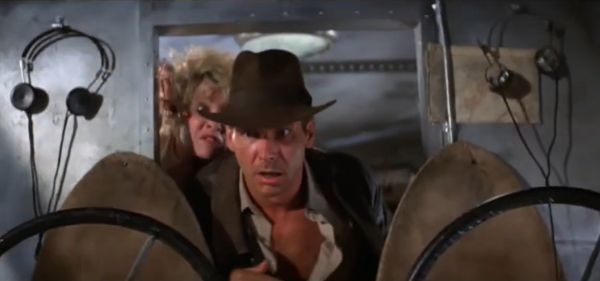
The unpleasant moment when autopilot kicks off
I believe that we can benefit a lot from that moment of discombobulation, where you reach for the habitual thing and it’s not there. It turns your brain on and brings you into the moment. Inevitably, this is less comfortable than letting an automated program (a habit) handle the moment, but it’s also freeing. When you have to fly the plane yourself, you lose that sense of ease and comfort, but now you can actually decide where it’s going.
Especially for us cradle-of-civilization types, adult human lives are mostly guided by our many autopilot (i.e. habit) systems, but you can gain a lot by selectively disabling one of them for a little while. Taking manual control is nerve-wracking, but only because you tend to let the system handle most of it.
I mean, you are the pilot right?
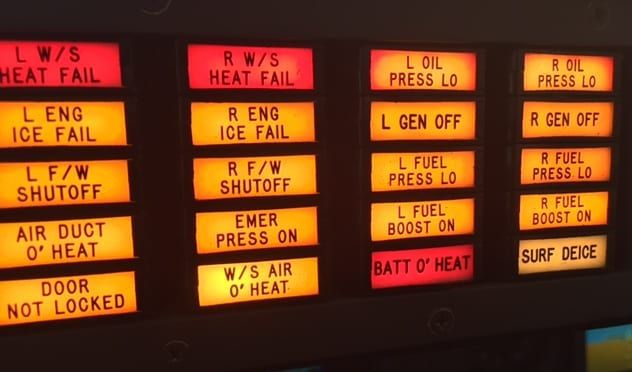
What happens when you fly manual for a while
In November I started a discussion forum for readers who wanted to give something up for a month, in the spirit of fasting or renunciation, the kind voluntary doing-without many traditional cultures have practiced, for a variety of reasons.
In this group, each person chooses and shuts off a habit, an autopilot program — drinking alcohol, having sweets after dinner, doomscrolling, making sarcastic comments – some repeating pattern that seems to be taking them to the wrong destination. They keep it off for a month.
We’re on month two now, and more than a hundred people have reported their experiences. Most of them report a certain arc to their campaign:
1. They feel stuck or trapped by a habit and decide to change it. They don’t like where things are headed, so they renounce the habit temporarily. No more staying up past midnight. No more after-work cocktail. No more doomscrolling.
2. Doing the new thing is awkward and jarring at first. Eating a 600-calorie dinner when you normally have 1000 feels dissatisfying. Biting your tongue when you’d normally complain feels like you’re trying to submerge a beach ball.
3. They’re tempted to put autopilot back on. Flying the plane manually is stressful. It feels forced and unsustainable. It takes so much effort to do things this new way. Is this your life now? Dinner is disappointing forever?
4. The “forced” feeling weakens. After a week or so, the club soda and lime stops feeling so forced and lame. The whiskey seems less magnetic to the mind. In fact, it might even become a bit off-putting — people discover that their old habit had short-term costs they’re suddenly free of. Sleep is better. They’re saving money. At this point, the behavior still has to be managed, but it’s manageable now.
5. The direction and destination have changed. Soon, the plane is pointing in a better direction, it’s not so stressful to keep it pointed there, and there are new rewards happening that the person wants to keep. It no longer feels so effortful pick up a book instead of the phone, or end dinner without dessert. The mind is encoding new muscle-memories and thought habits, making the beginnings of a new autopilot program, this time to a better destination.
Depending on the habit, it might take longer than a month before the plane is fully flying itself to the new destination. But it’s encouraging to see how quickly you can change course if you endure that initial “Oh no, someone has to fly the plane!” moment.
Before seeing so many people describe the above pattern, I’ve often interpreted that moment of discombobulation, with its drifting dials and blinking caution lights, as proof that things are going wrong, that I’m taking too big a leap, that I need to prepare or study more before I try to fly the plane.
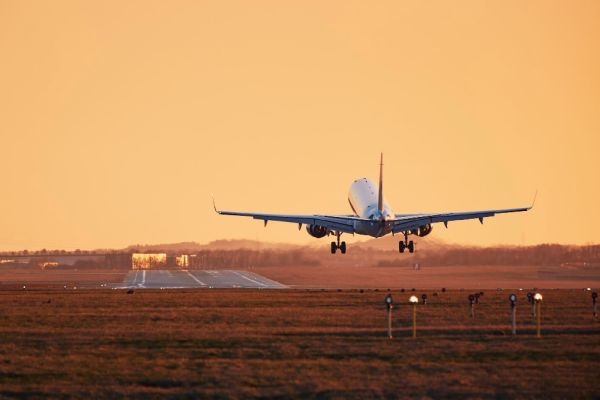
Now I see it as a feeling worth seeking, because it’s the feeling of taking control. I’ve been trying to recognize and embrace this feeling even in its micro-forms. Walking into a into a shop you don’t feel entirely comfortable in, for example, triggers a moment of disorientation, which quickly fades. Now you can go to that place. Same with trying a recipe that seems too tricky, or talking to someone you feel a bit intimidated by.
That “oh no” feeling is a good feeling, not in the sense that it’s pleasant, but that it’s good for you. It’s the feeling of learning to fly the plane to where you actually want it to go.
***
If you want to join the renunciation group, you can join the forum here.
 I'm David, and Raptitude is a blog about getting better at being human -- things we can do to improve our lives today.
Yup Well said!
David: really enjoyed today’s post. I’ve been going on two hour hikes without my phone or AirPods. It’s unnerving but also rewarding. Keep up the good work. Tom Greene (Wit & Wisdom)
Brilliant. I think you did a great job of explaining how being on auto-pilot happens and how uncomfortable, even alarming, it can feel to take the reins and break a pattern. The pictures in your post are so right on, and funny. I’ll be rereading this article, and reminding myself that: I “am the pilot, right?”
Loved the post. Thanks David!
I’ve been trying to use my phone less and I often leave it at home when I go out to get groceries or other chores. Being without it for a while is incredibly liberating. You come back home after 5-10 minutes and realise that the world is still running, and it’s okay. However, your mind feels a lot clearer. I’ve always had my phone on silent, turn off every possible notification … but I was still receiving some much mental clutter from voluntarily(?) engaging in social media, apps, and futile conversations.
Now some people are a bit annoyed with me because I’m no longer accesible 24/7 and it causes them discomfort. But I’m a lot happier now.
Funny how people who are prefectly willing to accept “sorry I missed your call; I was in the shower” will make so much of a fuss about how irresponsible it was for you to render yourself unreachable by leaving your phone at home while running an errand that takes half as long as a shower.
I’ve often been jealous of your experiments but now with the renunciation practice, I’ve been able to give up YouTube scrolling on my phone and not drive over the speed limit ( still in the process for the latter but appart from forgetting often, it’s going well).. although the urge for youtube scrolling is not out of my system completely even after a month and a half … so I’m not sure how long I can hold it off for. I feel so like an alcoholic must feel … the temptation is everywhere… I know that if I give in and put it back on my phone I will be doom scrolling before I know it. I’m absolutely loving having such a supportive community and learning more about myself and the feeling of realising that it is possible…it doesn’t have full control over me. renouncing things is easier than starting new habits I’ve noticed. next month I will try to lose a bit of weight by renouncing something rather than trying to force myself to exercise …something I know I will never do. it also helped me with the one big win I was doing in december… I never would have got so much decorating done if I hadn’t been renouncing youtube …thankyou again …it’s amazing your timing… seems to be that it’s all answers to my prayers ☺️
I was happy to see your report the other day. Nice work Anna.
Some of those habits are so strong we remain in great danger if we open up the floodgates again. Phone apps are designed to be addictive. I’ve quit certain ones several times, going a month or longer without using them, and then fall *fully* back into them again later. And as you say the temptation is everywhere. It’s such a tough situation we live in. One of the most addictive technologies ever devised, and the world runs on it. I am hoping this smartphone era doesn’t last forever.
yes it’s a big experiment that will just end when scientists start to truly research what it is doing to our brains. here in France they are thinking of copying Australia and banning all social media to all children under 16… I hope that happens.
thanks for your encouragement! I’m carrying on with the obw and renouncing … I think I will renounce something new each month… are you carrying it on every month?
I am not one of those people addicted to their phone, in fact I often forget to take it with me and occasionally run in to issues due to not having it. Maybe because I am old. But I am definitely addicted to buying shit I don’t need and that is proving so far impossible to uproot. I am guessing it is rooted in some deep fear of not having enough or fear of death, maybe both. After 40+ years of dealing with it, I am wondering whether I will ever be able to conquer this karmic pattern. It is very discouraging.
A few people in the renunciation group are doing no-shopping months, and have been successful. You have to make some rules about what constitutes shopping, and you can ease into it if you have to.
When I think of or see something I want to buy (other than replacing something I need), I put it on my 30 day list. After the 30 days, I look at this item on the list and ask myself if I still want to buy it. The vast majority of times, the answer is no.
In The Daily Stoic, the author quotes an addict: “addiction is when we’ve lost the freedom to abstain.” When I read that, I realized I couldn’t abstain from keeping up with news. I went cold turkey—deleted apps, cancelled subscriptions and, two months later, have never felt better.
That’s as good a definition as any I think. I know that feeling too — like it’s inevitable that I will do the thing, like it’s already been decided. Such a gross feeling.
Glad to hear you’ve kept away from news. People resist it when I say it but it’s just not good for us, and we seldom do anything with what we learn. It’s just a way to influence people en masse, and people are addicted to it.
I mean… I *am* the pilot. Thank you for this awesome reminder. I haven’t tried this with my phone yet, but I often take roads I’ve never been on to destinations I’ve never seen in order to force my entire brain to engage…. where are we? what is this? am I safe? what are some landmarks in case I get lost and have to find my way back? It’s kinda scary, but reminds me of the good old days… and, that I’m alive. I am The Pilot. ❤️
Hey!! I know you!
That “Am I safe?” question basically summarizes that discombobulation effect. Habit feels safe, even when it’s taking you to the wrong place. The human being is always concerned about its safety, and predictability is one of the few salves for that feeling.
Good to hear from you as always Lisis.
And I know you! And it’s great to know you… like, we sat across the table from each other in a random vegan restaurant in Waitsfield Vermont for no apparent reason. It’s kinda neat in this post-Y2K virtual simulation of life to know a person is Real. As Dolly says, “You can’t make old friends”, and I’m Thankful you’re one of those.
Comments on this entry are closed.