
Since spring I’ve been training for my first half-marathon, and during the past month I’ve slipped behind the program. The trouble began when I missed a two consecutive Sunday runs – the longest and most important runs of the week — due to a combination of bad weather and general cowardice.
The simplest way to recover from this lapse would have been to do more running. I missed some miles. No big deal — I could make them up, or just resume the schedule the next day, and still be fine for the race. And I could aid this recovery effort by cleaning up my nutrition a bit and getting more sleep.
That is what a rational individual would do, anyway. In the weeks since the lapse, I’ve been running even less, eating more junk, and staying up later. My short runs began to feel like long ones, and I stopped doing the long ones altogether. Then I caught a cold and took another week off to recover.
This extended sort of lapse is what you could call a rut. The initial trouble was just a bump or a pothole – a jarring and unpleasant spot, but not a problem if you just focus on staying on the road until you’re past it. Instead, I veered into the soft ditch, the wheels sunk in, and soon I couldn’t seem to get back onto the road under my own power. I felt like I had to wait until conditions allowed me to get the wheels back onto the pavement, which means plodding along in the mud until the rut shallows out again on its own.
I think that’s what defines a proper rut—a loss of momentum so thorough that simply resuming what you were doing, as you might have after a single bad day, no longer seems like an option. Instead you feel like you have to work your way back to your regular programming, by way of a long and convoluted detour.
Read More

Each weekend of the summer I try to take a long bike ride to some part of the city I’ve never been to.
I do this for three reasons. It’s several hours of exercise that doesn’t feel like exercise. It also gets me out doing and seeing things, which makes me feel like I’ve used the day well.
The third reason is that looking at new things, even if they’re just new streetcorners or deer trails, helps me recover a certain uncomplicated way of looking at things that used to be automatic when I was a kid.
To select a destination, I use an obscure app called Randonautica, which creates an X-marker somewhere on a map of the city. The app’s “About” section says it chooses this location through “theoretical mind-matter interaction paired with quantum entropy to test the strange entanglement of consciousness with observable reality.” It says the app’s users, when they arrive at their prescribed locations, often find “serendipitous experiences that seemingly align with their thoughts.”
I assume this is tongue-in-cheek nonsense and that the co-ordinates are random. However, the place it tells you to go is indeed a real corner of the physical world. When you arrive at the spot, it never looks how you might have pictured it, and usually you witness something there that seems oddly significant.
The first time it sent me to a creekside clearing, where I saw a strange black glob in the water that turned out to be a mass of tadpoles. Another time it sent me to a gravel back lane near where I used to live, at a spot where someone had written “DAD!” on the fence in some kind of white resin. Another day it took me to a book-exchange box containing only children’s books and Stephen King’s Tommyknockers.
Read More
After being ousted from the Tonight Show, Conan O’Brien gave a moving farewell speech that culminated in a specific request to his fans: please don’t be cynical. He said cynicism is his least favorite quality and it doesn’t lead anywhere.
I remember liking that he said that, given how much grief his fans were giving Jay Leno over their very public time slot conflict. At the time I was 29 years old and approaching the peak of my own cynicism. Since then I’ve gradually adopted a more generous view of human beings. This is not because I’ve become a particularly more generous person, but rather because a cynical view of our species no longer strikes me as accurate.
I now think humans are mostly good, despite how reflexively we tend to disparage our own species. For example, when Foo Fighters drummer Taylor Hawkins died suddenly on tour in Colombia last month, I came across this very normal and predictable tweet:
”The first order of business when a bereaved family asks for privacy is of course to release a toxicology report. What a society.”
It’s not important that this thought came from local Winnipeg punk legends Propagandhi, because anyone could have said it, including me. But it is a perfect example of the common fallacy that humans can be fairly summarized as a mean and selfish lot.
Read More
DISCLAIMER: Obviously this is not medical or professional advice of any kind. These are my thoughts and you can read them if you like. I make no recommendations about what you should do and I take no responsibility for your choices.
The other day a friend shared what I thought was a profound observation: bananas are not yellow. At least they’re mostly not.
The yellowness of bananas happens only for a week or so out of their entire lifecycle. Most of the time they’re green or brown. But human beings are fixated on that fleeting yellow phase, so we think of bananas as intrinsically yellow things.
I had a similar epiphany the other day when I told someone I feel better when I skip the first meal of the day, something I’ve been doing for a few months. It occurred to me afterward that I’m not actually skipping anything — there is no morning meal in my life, so there’s nothing to skip. Despite how normal this feels for me now, it’s difficult to shake the idea that a day still has three meals as an intrinsic property. Days have three meals, and bananas are yellow.
After I published a post discussing diet and eating in 2020, a reader told me that he doesn’t eat at all on Tuesdays. I was immediately intrigued by this idea – something about its complete disregard for tradition, its promise of freedom from imposed structures. When I said might try that, he recommended not telling anyone, because people are extremely attached to the notion that days must have three meals, not just for themselves but for everyone else.
I’ve finally begun to do this sort of regular fasting -– eating only one meal some days, and occasionally zero meals. And I have decided to tell people I’m doing this — partly for accountability, but mostly because I’m fascinated by how strongly people resist the idea.
Read More
Last weekend I was driving a friend home down Portage Avenue and we encountered an unexpected traffic jam. Four lanes had been reduced to one because a crew was working on the overpass.
Even though it was Saturday afternoon and neither of us were in any sort of rush, and even though I was consciously trying to take the delay in stride, I couldn’t help but comment that they’ve been working on that bridge “for 8,000 years now” and that contractors seem to take as long as possible to finish things.
Having worked in the construction industry, I know this isn’t true. Contactors get paid for the completion of the job, not the time spent on it, and the city does everything they can to minimize traffic disruption, which is why this was happening on Saturday and not Monday.
Read More
I sleep better when I don’t eat snacks after dinner, especially junky carbohydrates, so last week when I visited a friend’s house I made a specific resolution to decline all such snacks.
Sure enough, as though the scene was a moral fable I had written myself, I was at one point handed an open bag of Doritos. I then watched myself pull out a handful of chips and start eating them, while making a resolution for next time.
Later, when the Doritos were reduced to crumbly fragments barely worth fishing out of the bag, I reflected on what had gone wrong, and remembered something I discovered years ago about resolutions but forget constantly.
If aliens were to visit earth and observe us living our lives, perhaps what would baffle them most about our species is not our struggle to co-operate with each other, but our struggle to co-operate with our own selves. You’d think a sentient organism should at a minimum be able adhere to its own decisions — to leave in time to catch the early bus, to do the lunch dishes right after lunch, to refrain from eating the entire sleeve of Oreos, especially after making explicit vows to do precisely those things because they make perfect sense.
For whatever evolutionary reasons, part of the game of being human is to wrangle ourselves into acting out the choices we’ve already determined are the right ones, and the resolution is our first-order tool for doing that. You make a promise to yourself – whatever that means exactly — that you will indeed do the thing you worry you won’t do. I will start the term paper the day after it’s assigned. I will not read the comments beneath news articles. I will wave away the Doritos bowl when it comes around.
There may be people for whom these sorts of bare resolutions do work reliably, and I assume these people become astronauts, pro athletes, and heads of state. For the rest of us, the resolution is a comically ineffective tool for changing course.
Read More
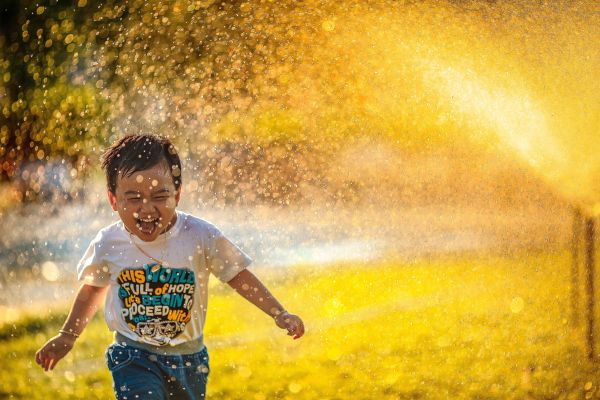
My junior high English teacher laughed involuntarily when one of my classmates teased, “Don’t you wish you were our age again, Mr Harvey?”
He was a polite man but he laughed at her comment for a long time. “This may surprise you,” he said when he was able to speak again, “but no grownup wants to be fourteen again. I’d go back to twenty-five in a heartbeat, but not fourteen.”
My fourteen-year-old brain found it interesting that Mr Harvey did have a preferred age, and that it was somewhere between fourteen and his current age (late forties, I guessed). It meant there must be some important quality that disappears after a certain time and then you want it back.
At that age I don’t think I knew that feeling yet — of yearning for some unrecoverable quality of the past — but I was familiar with the concept. Adults seemed to refer constantly to the Good Old Days, when this or that, or everything, was better. Cars. Presidents. Music. I watched the whole run of The Wonder Years, a TV show about exactly that sentiment.
I think I even remember our valedictorian, a few years later, including in his address a famous line from Mary Schmich’s “wear sunscreen” monologue — “You will not know the power and beauty of your youth until they have faded.” I probably nodded at this remark, assuming its truth but still only able to imagine it.
Read More
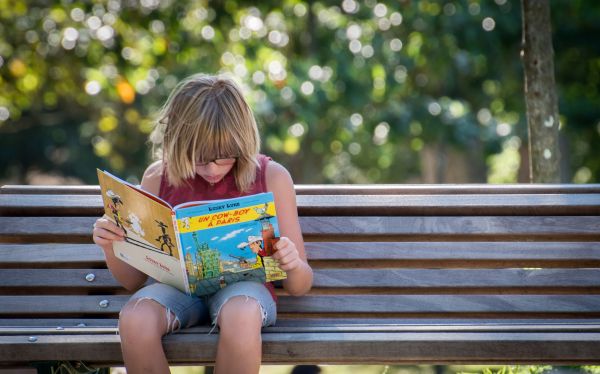
As most of you know, I just took three days completely offline so that I could discover what would be difficult about it.
I have so much to say about that three days, and first thing I would like to report is that there was almost nothing difficult about it.
To my surprise, I didn’t crave the internet at all. I wasn’t dying to check email, judge people on Twitter, or figure out the day’s Wordle. Instead I did my daily work — very little of which requires the internet, I discovered — and simply lived life in the physical world.
This simplicity was disorienting in a way. Many times a day I would finish whatever activity I was doing, and realize there was nothing to do but consciously choose another activity and then do that. This is how I made my first bombshell discovery: I take out my phone every time I finish doing basically anything, knowing there will be new emails or mentions or some other dopaminergic prize to collect. I have been inserting an open-ended period of pointless dithering after every intentional task.
With my phone parked in a cardboard pouch taped to my kitchen wall, this ritual was unavailable, so I again and again found myself hitting a kind of intentionless vacuum, where nothing would happen until I consciously formed a new intention to get on with the day, in a way of my choosing. I can’t convey the strangeness of this feeling — it was like repeatedly discovering that I had misplaced my cane again, only to remember I can walk just fine.
Read More
In a recent online discussion, several peers made a simple claim I want to test out: when you take a break from the activities you know are eroding your attention span—mostly phone and internet habits–you notice it improving after only a day or two.
My attention span has certainly worsened over the last ten years (especially the last two), and this worsening seems to correlate with how much I use the internet. I presume it is a two-way relationship—a shredded attention span makes it more difficult to absorb yourself in offline activities, which makes online activities more appealing, and so on.
I immediately began planning the simple experiment of staying offline for three days, and quickly realized that such a break would just create a speedbump, not a lasting change. I could see myself dumping my laptop in a drawer, blocking my fun phone apps for 72 hours, then catching up on my missed messages and Wordle puzzles on day four, essentially rebounding me right back into always-online mode.
Read More
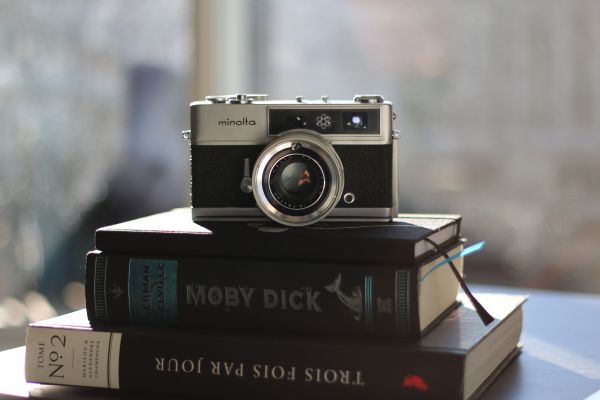
One financial lesson they should teach in school is that most of the things we buy have to be paid for twice.
There’s the first price, usually paid in dollars, just to gain possession of the desired thing, whatever it is: a book, a budgeting app, a unicycle, a bundle of kale.
But then, in order to make use of the thing, you must also pay a second price. This is the effort and initiative required to gain its benefits, and it can be much higher than the first price.
A new novel, for example, might require twenty dollars for its first price—and ten hours of dedicated reading time for its second. Only once the second price is being paid do you see any return on the first one. Paying only the first price is about the same as throwing money in the garbage.
Likewise, after buying the budgeting app, you have to set it all up, and learn to use it habitually before it actually improves your financial life. With the unicycle, you have to endure the presumably painful beginner phase before you can cruise down the street. The kale must be de-veined, chopped, steamed, and chewed before it gives you any nourishment.
Read More
 I'm David, and Raptitude is a blog about getting better at being human -- things we can do to improve our lives today.
“Enjoyment always requires attention.” Love this! Such a fresh take on mindfulness. ❤️ I found your blog when Becoming Minimalist linked to it, and am really enjoying it, thank you!