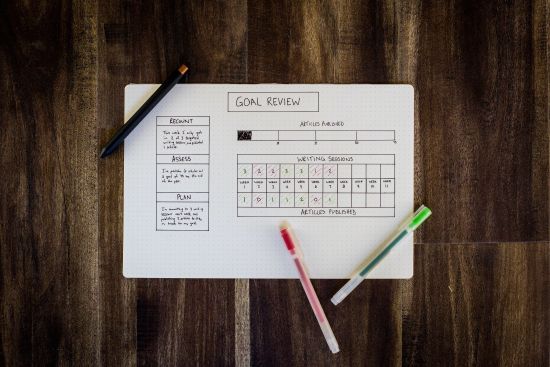
In 2021 I began to dissect my lifelong problem of severe procrastination, instead of just wrestling with it.
I used to see it as a simple character flaw, a ball and chain hanging from my wrist as I tried to fulfil life’s requirements. Now I think of my capacity for getting things done (or not) more as a semi-functional Rube Goldberg machine. Instead of metal chutes and springs, its parts are interconnected habits. It runs smoothly in some places, gets hung up in others, and all of the parts can be studied, understood, and adjusted.
One thing that helped a lot was distilling my observations about the machine into a dozen or so single-sentence “laws” that describe how productivity and procrastination seem to work, at least for me.
It was intended to be a personal reference, taped to the wall near my desk, but every time I look at it I realize other procrastinators could benefit from some of it.
Read More
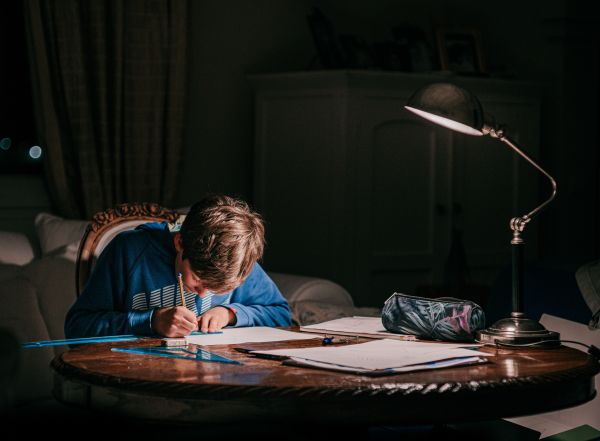
I’ve never had great penmanship, but one day in grade four it went from atrocious to merely eccentric after receiving a single piece of advice from my father.
I had already received frequent advice on the matter from my teachers. Pay attention to what you’re doing. Don’t get frustrated, just make each one a little better. Practice, practice, practice.
My dad’s advice was much more specific: try to make the bottom of each letter touch the blue line.
This made for an immediate improvement, because it made it clear what to do differently—get the loop of the “b” and the trunk of the “t” to meet the cyan lines, rather than float somewhere above them.
The advice of my teachers was still valid, despite being all clichés. You probably can get good at almost anything by doing it repeatedly and paying close attention, while trying to improve on each repetition. That’s probably how Larry Bird got good at basketball.
In fact, some of the best advice comes in the form of clichés. Be yourself. Seize the day. Fake it till you make it. Despite how trite these phrases sound now, they are still deep, paradigm-shifting insights about being human. They’ve undoubtedly changed countless lives, which is how they became trite. Precisely because these principles have been discovered and expressed many times, in many contexts, they’ve become too general and too familiar to revolutionize how someone does something.
Read More
This summer I released the book I had always wanted someone else to write: a guide to getting things done that wasn’t written by a high-achiever, but by someone who has always struggled to reach “average” levels of productivity.
It would be short enough to read in one sitting and implement the same day. It would contain a single, focused method of getting stuff done, which you would know by heart by the end of day one.
I called this book How to Do Things: Productivity for the Productivity-Challenged. It was sort of a two-pronged experiment.
First, could I convey my own idiosyncratic method of getting stuff done to the general public, and would they find it helpful?
Second, and more importantly: could a 35-page book be better at teaching you something useful than a 235-page book?
Read More

I’m 41 now and finally learning to read.
Getting through novels is something I’ve always found extremely difficult. As much as I enjoy a good story, most of them seemed to take forever get to the straightaway – the point in the book where I no longer had to effort my way through the pages.
A few rare books would grip me from the beginning, and I’d finish them a couple of days, with no difficulty whatsoever. Perhaps a tenth of the time, I’d hit the straightaway after a hundred pages of dutiful slogging. The other ninety percent I would ultimately abandon. Almost everything in my bookcase has a bookmark sticking out of the top somewhere near the front cover.
There are few things I’ve wanted more than to be able to pick up a big book and read it in two weeks, like an average reader. Most of the “how to read better/faster” advice really just tells you to spend more time reading – carry a book at all times, read on the bus, read in the shower.
That seems to be the usual advice for getting better at anything, really: do more of it. People who are more skilled have simply done more of that thing. No amount of volume seemed to address my problem though. I “plugged away,” as advised, for 30 years, and the problem remained.
Read More
William Irvine, an author and philosophy professor I’m a big fan of, often tries to point people towards a little-discussed fact of human life:
You always know when you’re doing something for the first time, and you almost never know when you’re doing something for the last time.
There was, or will be, a last time for everything you do, from climbing a tree to changing a diaper, and living with a practiced awareness of that fact can make even the most routine day feel like it’s bursting with blessings. Of all the lasting takeaways from my periodic dives into Stoicism, this is the one that has enhanced my life the most. I’ve touched on it before in my Stoicism experiment log and in a Patreon post, and I intend to write about it many more times in the future (but who can say?)
To explain why someone might want to start thinking seriously about last times, Bill Irvine asks us to imagine a rare but relatable event: going to your favorite restaurant one last time, knowing it’s about to close up for good.
Read More
In the first months of the pandemic, many people suddenly had trouble focusing on work, finishing books, and staying awake during meetings. Others reported instances in which they forgot their own phone numbers, put the clean laundry in the washer, and got into the shower with their glasses on. Ceiling-staring and aimless scrolling reached an all-time high.
It happened to me too – a sort of “mind fog” that made it more difficult to do almost everything. I became slower, drowsier, less motivated, and less focused. (And I wasn’t very focused to begin with.)
Experts in newspaper columns gave us a quick explanation: anxiety. Stress and anxiety can cause this sort of mental haze, and they’re a normal response to such an abnormal situation.
I always found this answer suspicious. It seemed too simple, and it was usually expressed without doubt, despite the “unprecedented” nature of the situation. It particularly made no sense in my case, because by spring 2020 I was experiencing far less anxiety than I had for the previous eighteen months. At that time I had just emerged from dark period of my own, and by April my anxiety had dropped to almost nothing compared to its peak. But the mind fog was new, and it was unmistakable.
Read More

I always liked those weird exploration games from the 1980s and 90s, like Zork and Myst, where you wake up in a strange environment, with no idea where you are or even who you are. You have to gather the context from the inside out, by wandering around, pushing buttons, peering behind wall paintings, and reading notes left by strangers who were here before you.
I like those games because that’s exactly what it’s to be a human being, if you think about it.
Your life began with a kind of singularity. A personal Big Bang. Without warning, you emerged from unconsciousness into a sea of light, color, smell, faces, feelings, and other completely unexpected phenomena, and there was nothing to do but attempt to navigate it. It was the ultimate “cold open” – no context, no explanation, just things happening.
At this early stage you know nothing about the world except what you feel in each moment. The feelings are new, intense, and definitely real. It’s a torrent that keeps coming, and at some point you realize it isn’t going to subside. This strange condition of being tossed in a sea of sensations, which you will one day call “existence,” or “life,” comes no reference point, just one implicit job: make sense of all this.
Read More
I often go with my friend and her chihuahua Abby to Abby’s favorite place in the world, which is a large open prairie field at Beaudry Park. It’s the only place she can run around all she wants without encountering her least favorite things: other dogs, and human children.
Sometimes there’s a line of cylindrical haybales at the edge of the big field. One time, my friend stuffed a chicken treat into one of the haybales, low to the ground so Abby would find it. After retrieving it, Abby went straight to the same spot on the next haybale, looking for the chicken that all haybales apparently contain.
We laughed, but humans are the same. Every time I go near the Assiniboine Park neighborhood, I’m helpless not to think of a nearby ice cream parlor called Sargent Sundae. In fact, I can’t even think about that area of the city without entertaining the possibility of working an ice cream sortie into my day. I suppose that’s natural; remembering food locations is undoubtedly one of the main reasons our minds developed the tendency to make such quick associations.
The human mind is a high-horsepower free-association machine. Walk down a street you lived on as a child and notice the memories flood in, in astonishing detail — not just what grade you were in, who your friends were, and what you did on Saturday mornings, but the threadbare armrest on the basement easy chair, the sun-discolored cassettes that lived on your sister’s windowsill, and your pink-and-turquoise bouncy ball – the one with teeth marks in it — that ended up in the eavestrough.
Read More

One way to appreciate virtually any moment of your life is to pretend that the whole thing is already over.
Your life came and went a long time ago, but for some reason you’ve just been sent back to this random moment, here in this office chair, or in line at Home Depot.
It isn’t clear why you’ve been sent back. Maybe it was a cosmic accounting error, or a boon from a playful God. All you know is that you’re here again, walking the earth, having been inexplicably returned to the temporary and mysterious state of Being Alive.
Any moment will do for this experiment. In fact, the more mundane the moment, the more profound the effect. You might find yourself, in this instance, pushing a cart through the frozen foods aisle. Or maybe you’re seated in front of a bowl of cereal at the speckled Formica breakfast table you bought on Craigslist. Or you’re carrying a bag of recycling down the back stairwell on a muggy night. It’s definitely your life though, and at least for now, you get to be alive again.
Read More

Some people seem to be natural doers. When there’s something that needs doing – a table to be cleared, or a flowerbed to be weeded — they get uncomfortable and start doing it.
Natural doers are mysterious creatures to me, but I have met and observed many of them. Doing seems to be their most natural response to existence. Even if the task is in some way objectionable, its not-doneness is apparently more objectionable. So they start the doing process and this appears to give them some relief. The gravity in the doer’s inner world seems to draw them in the direction of action.
Of course, everyone understands the rewards of getting things, by whatever means, to a state of doneness — even those of us who live in an inner world with reverse gravity. Doing is vital. It’s the only way to express ourselves, maintain our households, and create things that improve people’s lives.
Read More
 I'm David, and Raptitude is a blog about getting better at being human -- things we can do to improve our lives today.
“Enjoyment always requires attention.” Love this! Such a fresh take on mindfulness. ❤️ I found your blog when Becoming Minimalist linked to it, and am really enjoying it, thank you!