
I appreciate Sam Harris’s apt analogy about inner monologues — being caught up in your own thinking is like having been kidnapped and held hostage by the most boring person on earth. You’re forced to listen, as though at gunpoint, to an internal commentator who insists on telling you its impressions of everything it notices or thinks about.
Nothing is too petty, too repetitive, or too obvious for the boring kidnapper’s ongoing monologue: Susan was wrong to criticize people who wear Crocs to the grocery store; a certain politician is the worst person alive and here’s why; your ex-partner was definitely out of line when he accused you of wasting dish detergent that time; the two halves of this Oreo don’t line up, but it would be so much nicer if they did.
If you’re ever able to step back from your own mental chatter, and listen to it with some critical distance, perhaps after a long meditation, or in one of those tired but insightful moments near the end of the day, you might find it indeed exhibits many of the characteristics of an extremely boring and self-absorbed person. It’s not that you yourself are this way — surely you don’t say everything that comes to mind. But the mind does.
Read More

I have a radical proposal. An experiment that might just change your life. If you want to try it, I’ll do it with you.
It goes like this:
Live most of your days according to your normal habits, doing your job and your everyday stuff the same as always. Then one day a week, let’s say Tuesday, you live by a specific dictum:
From the minute you wake up, do without hesitation the thing that most needs to be done in each moment, regardless of how appealing it is. Bring your full attention to each such act, as though it’s your sole purpose on earth. Let go of every other concern.
In other words, on Tuesdays, and only Tuesdays, you devote yourself to doing the wisest and most helpful thing you can think of in each moment, all day long. You don’t try to strike any sort of “balance” between doing what you want to do and doing what you know is best. You choose the latter every time.
If the moment calls for taking a big gross garbage bag to the dumpster, you calmly pick it up and go. If it calls for broaching an unpleasant topic with your boss, you broach the unpleasant topic with your boss. If it calls for starting your term paper today even though you could rationalize waiting till Saturday, you sit down and start. If it’s time to slip your phone back into your pocket rather than scrolling another page of Reddit, you do it.
Read More
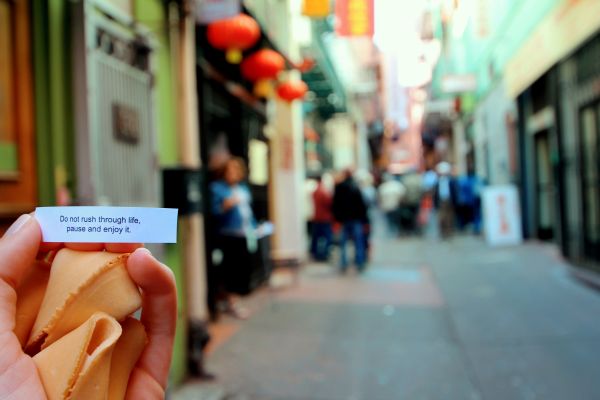
One of the hardest things about trying to be mindful is that it is often powerfully boring.
You’re trying to pay close and gentle attention to the ordinary experiences of life — sipping tea, opening a door, breathing in through your nose — and this is supposed to transform your life if you keep at it.
But it’s hard to pay this much attention to ordinary life stuff, because you already know what’s going to happen. You already know what it feels like to sip tea and walk down a sidewalk and pass through a door. It’s hard to give things more attention than they seem to need.
I’ve been practicing mindfulness for a long time, and it has transformed my life, and I still periodically run into this same problem. The rustle of leaves or the inner caress of the breath only seems to bear so much attention, so much looking and noticing, before you want to say, “Okay, I see it. What next?”
Read More

In the early 1990s, perhaps my favorite part of the week happened between 7:00 and 7:22 on Sundays, when America’s Funniest Home Videos broadcast their best submissions.
It’s hard to convey how precious this material was at the time. A good video of someone dropping a birthday cake down the stairs, or tumbling headlong into a kiddie pool during a dizzy-bat race, was still a rare and hilarious sight. Those perfect moments of comedic human accident were captured on video only rarely, because camcorders were still an expensive luxury item. To have all the best camcordered clips concentrated in one place was something truly special. Laughing at them with my parents and sister made for some of the best quality family time I remember.
There was only that twenty-two minutes per week though. (The final eight minutes of the show always consisted of Bob Saget drawing out the awarding of the weekly ten-thousand-dollar prize.) As with most highly gratifying things, supply was very limited. After that you had to do something else.
Read More
Cracking an egg into a bowl is a two-step process. First there’s the careful strike onto the countertop. You want to crack it just enough to enable the second step.
The second step is to pull the cracked egg apart. You put your fingertips along the jagged edges of the crack and gently pull, trying to release the yolk and white cleanly into the bowl.
You cannot pull apart an uncracked egg, because it’s smooth and edgeless. The whole point of the first step is to change the egg into the kind of egg you can pull apart, by giving it a place for your fingertips to go.
Read More

During the late 2000s, around when I started this blog, there was a trend among young male entrepreneurs called “Monk Mode.”
Everyone had a different idea of what that term meant, but generally it referred to taking a definite period of time – a week to three months or more – to focus with unusual intensity on certain important and fruitful pursuits, while abstaining from certain distracting or self-defeating activities.
Somewhat like a monk, you would voluntarily adopt a standard of heightened discipline, following a few non-negotiable rules, in order to bring certain important things to the fore of your life. A person might do this in order to launch a website, finish a manuscript, or return to the level of fitness they enjoyed in college.
The last time I heard this phrase was around 2009, and at the time it seemed indistinguishable from “working hard until I finish this current project,” which is what I was always trying to do anyway.
Read More

Imagine that when you die your life is converted into an extremely long, first-person YouTube video, which you may review at your leisure.
While you’re fast-forwarding through it, looking for certain memorable moments, one thing you’d see frequently is a person you know entering the room you’re in, talking with you for a while, and then leaving for a much longer while. Seeing people come and go like this might crystalize one of the poignant realities of living a human life: you’re the only one who’s there from start to finish.
In life, there’s you — the omnipresent Protagonist — and then countless Other People. Most of them are bit players, but some of these Other People are major characters in your story. They might spend quite a lot of time onscreen, but they always remain Other People. You never get to see inside their heads, you don’t get to choose their behavior, and ultimately you know them only by what they do and what they say. Most of the time, no matter how large their role in your story, they’re simply offscreen — somewhere out there in the world, doing who knows what.
I had a surreal moment, while having dinner with one of my favorite Other People, in which I realized that at that moment, as I sat across a Formica table in a local pizza place, that I was the Other Person. At least for my friend, I was the person who was not present most of the day, who at some point appeared at the door, smiled and sat down at the far side of the table, talked about what I’d been up to, ate some pizza, walked with her to the corner, said goodbye, and disappeared again into the distance. I am one of many Other People for her, just as she is for me.
Read More

Throughout my life, when faced with adversity, I’ve often wanted to magically become either a cat or an Olympic athlete.
Cats are enviable because they’re immune to worry and striving, and feel no pressure to accomplish long-term projects. They are completely satisfied to bask in a square of sunlight on the carpet, or squat on a dresser like a Zen chicken, blinking slowly and indifferently. It would be nice to have such a close alignment between one’s natural desires and one’s capabilities.
I’ve envied athletes for similar reasons, although they approach life very differently than cats do. Top athletes have clear goals and a kind of inner drive that seems able to move them through vast amounts of pain and difficulty. On some level they must want to get up at 5:00am to throw medicine balls against a wall. They want to run or ski or pommel-horse until their bodies – not their minds – threaten to quit on them, if that’s the cost of a shot at a gold medal.
I’ve never wanted a gold medal, but I’ve always wanted whatever quality it is that makes people want gold medals – or anything — that badly.
Read More

A million years from now, when alien anthropologists begin gathering evidence about what humans were like, they will definitely want to dig up the Self-help and Spiritual/Religion sections of our bookstores and libraries. There they will find direct evidence of what we yearned for and struggled with.
One thing that might surprise them is that we really wanted to be more present, and we struggled to do so for some reason. Our visitors will find no evidence that other earth creatures – cats, fish, protozoa – suffered any such difficulty.
Humans though, the aliens will note, spent most of their adult lives distracted from what is happening around them by thoughts of what happened earlier or could happen later. This problem was so great among the human species that returning to “the present” became a central element of both their religious practices and popular culture.
People designed mental exercises to get better at residing in the present moment, involving listening to mountain streams or patiently watching candle flames. Others wrote poems and stories about achieving a fabled state of calm abiding — in which one was lucid, engaged, and at ease –- with such fervor that some of these stories mutated into religions.
Authors wrote books like Be Here Now, Wherever You Go There You Are, and The Tao of Pooh, and gave talks in university auditoriums and monasteries. Musicians wrote songs about the primacy of being present in life, including wistful appeals like Do You Realize?? and tragic warnings like Cat’s in the Cradle.
Being present, just like being in love, was such a ubiquitous subject for human art and conversation that it was hard to get away from it, especially as new handheld technologies made the problem worse.
Read More

On road trips as a kid, I often ended up watching the mesmerizing rise and fall of power lines that lined the road. This was usually after I had exhausted the more accessible modes of entertainment I had with me — usually Mad Libs and 1001-facts-type books — and perhaps after a boredom-induced tantrum or two.
There was something pacifying about this silent rising and falling pattern. I would ignore the poles and just watch the endless black wire itself, staring right at the point where it met edge of the van’s window. The wire would dip down gracefully, like a figure skater about to swing her leg up into a double axel. Then it would accelerate up to its peak, and immediately swoop back down again.
That peak, that crest, would only last an instant, but there was a certain surreal thrill about it, like seeing a fish jump, or a shooting star. It was gone before you could really look at it, but you absolutely saw it, and in that silent instant of vanishing there seemed to be a wink of magic.
Years later, as a mindfulness-curious adult, I learned that human beings have been observing these moments of vanishing, on purpose, for a very long time. By noticing the instant where a thing disappears – a drop of water into the bath, a firefly’s glow winking out – people in various cultural traditions have tried to catch glimpses of whatever that bit of magic was that I first noticed on those endless rural car rides.
Read More
 I'm David, and Raptitude is a blog about getting better at being human -- things we can do to improve our lives today.
“Enjoyment always requires attention.” Love this! Such a fresh take on mindfulness. ❤️ I found your blog when Becoming Minimalist linked to it, and am really enjoying it, thank you!