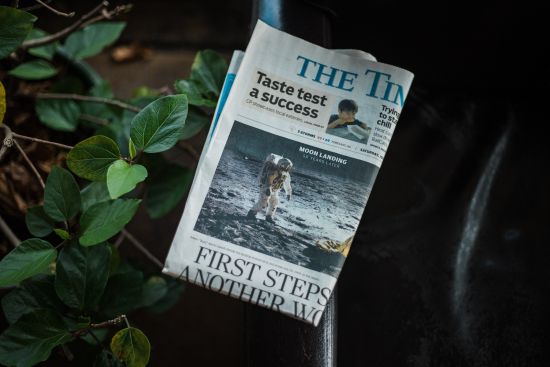
The eventful month of June 2020 seemed like the right time to add a new daily exercise to my mental health regimen: read an opinion piece that makes me uncomfortable.
I had noticed that in my online surfing, I was hunting for opinions with certain specific qualities. I would scan past headlines that struck me as too fawning, too reactive, too woke, or too conservative, until I found one that looked like it was “worth my time,” or “had something to say.”
It soon became clear that I was looking for the most palatable opinions, which of course are my own opinions.
Ideally, I would find my views expressed by a professional columnist with a kind of cutting wit I would like to have. When I found a piece that met these narrow standards, I would read, enjoy, and share it, then repeat the process.
Read More
Throughout my life I’ve occasionally had spells of a few weeks or months in which I don’t feel great: I seem to have low energy, brain fog, a lack of optimism, and indecisiveness. Sometimes it’s only a day or two.
There doesn’t need to be some life event that triggers this compromised state, so it’s hard to know what to fix. In this state I don’t quite know how I’m doing, only that some things feel off, and getting ordinary things done seems inexplicably difficult.
I hope you’re doing okay on this particular day of your life. But in case you’re not, I want to share something that has helped me move through the murk, even though I don’t know what the murk is exactly.
Read More
My friend said that wearing a mask added an unexpected challenge to her grocery shopping experience: nobody can see you smile.
She had always depended on a polite smile to smooth over shopping-cart traffic jams and accidental incursions of personal space, and now this versatile social tool was unavailable.
I discovered a similar problem on my first silent retreat. I had a habit of saying “Oh, sorry!” whenever I thought I might be in someone’s way, but we’d all taken a vow of silence, so I couldn’t. I felt like a wrecking ball.
In the end, my friend determined that it didn’t really matter, because people can somehow sense your attitude towards them, even without obvious visual cues like smiling. All that’s ever needed is genuine goodwill, even if it isn’t coming out of your face.
Read More
When quarantine started, I imagined my day would remain more or less the same before 5pm, because I already worked from home.
To the logical part of my brain, this was a simple algebra equation. My nine-to-five life stays constant, and my social life and errand-running would be replaced by their awkward and sometimes challenging COVID-era versions.
Two months later, the after-work stuff is running smoothly. My social life is fulfilling enough, on a rich diet of phone calls, one-on-one walks, and Zoom gatherings. I’ve become far more efficient at grocery shopping. (Why did I go so often before?)
Achieving an ordinary workday, on the other hand, has become uncannily difficult. Whatever I’m trying to do – write a blog post, return an email, tackle a website bug – it feels like I’m moving through mental molasses.
Read More
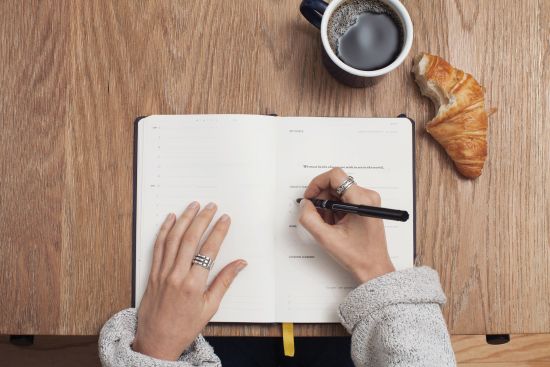
If naturalists were studying me in my home, they’d quickly recognize my natural migratory cycle. I’ll work in my home office for several months, until my desk accumulates a horseshoe-shaped wall of unfiled papers and half-read books. Then I’ll move my laptop to the kitchen table and stop going in my office at all.
In the kitchen, whatever good habits I had start to break down. I begin work later, get less done, and interrupt myself more often. Each time I attempt to get something done I can feel the encroaching undergrowth of every other unstarted or unfinished project. A certain psychic encumbrance descends on my mind. Everything I do feels like it’s not the thing I need to be doing.
This spiral worsens for a month or two. At some point, I get fed up with everything being such a slog. I spend a day clearing my virtual and actual desktops, and the cycle starts anew.
Read More
Movies frequently scared me when I was a kid. Certain moments in Gremlins, The Secret of Nimh, and even Willy Wonka and the Chocolate Factory made my insides clench with fear. It was the worst of all feelings.
Most other kids seemed completely unperturbed by these movies, which created the additional pressure, in certain birthday party or sleepover situations, of having to pretend I was totally not scared and in fact was quite enjoying myself.
While I wasn’t brave, I was clever. At some point I discovered a wonderfully effective trick for becoming invulnerable to movie scariness without looking away or covering my eyes.
I would continue to look at the screen, but slightly cross my eyes, putting the screen out of focus.
This subtle move instantly broke any movie’s spell. Threatening gremlins and sword-wielding rats became soupy blurs, accompanied by disembodied sound effects. In an instant, I could dissolve the scary tale and turn it into moving shapes and sounds, freeing myself from the story’s emotional grip.
In reality, the movies were only shapes and sounds, but now I had a way of choosing whether my emotions were tied to the events depicted by them. Whenever I wanted to, I could exit the swirling sea of emotional tumult — or jump back in.
I had no idea I was doing something I’d later learn in meditation halls: deconstructing a narrative experience into a sensory one, and moving my attention between these two levels on purpose.
Read More

In 2011, on a tour of Mauna Kea’s summit, I looked at Saturn through a large reflecting telescope and it blew my mind.
When you’ve seen a thousand pictures of something, you feel like you’ve seen it before. What I saw through the eyepiece was entirely new. I expected another picture of Saturn, but instead I saw a real object—a small, grey-orange ball, fixed in the center of a perfect, razor-flat ring. I could even sense the empty, airless space around it. It looked impossible. But there it was.
In recent weeks I’ve found comfort in revisiting that image in my mind, and the feeling of vastness it gave me.
For me it’s a simple reminder of context. No matter what my current worries are, they ultimately concern a small part of my entire life, and my life is one of many billions of lives on Earth, each with its own concerns. And no matter what happens in any of those lives, Saturn is still out there, looking gorgeous, unconcerned with coronavirus, the S&P 500, and any of our grey hairs.
Read More

It seems as though we’ve entered the “What do I do with myself?” phase of social distancing. Over the last week or two, several billion daily routines essentially evaporated, and now each of us has to make a new one. Indoors.
The wonderful comments from last week’s post offer a glimpse into the still-forming routines of more than 500 people. A major theme is getting back to things that ground us and keep us present: reading, arts and crafts, phoning old friends, yoga, baking, and meditation.
Basically, everyone’s trying to stay healthy, sane, connected, and as helpful as they can be from home. My hope is that we’ll come out of this experience changed in exactly those ways: some degree healthier, saner, more connected and more helpful.
Not everyone has more time these days, but with everything closed, we have fewer ways to spend it. So it’s a good time to dive into home-based pursuits that make us healthier and more resilient. As one person put it, “It’s bad time for many things, but it’s a good time to read the classics, bake bread, and learn to meditate.”
Read More
I’m not sure what last week was like for you, but I’m guessing it felt different from the week before. You may have experienced major changes in your work situation, your finances, your child-care scheme, your pantry inventory, your worldview, your handwashing technique, your vacation plans, and your feelings towards doorknobs.
What seemed relevant then may not now, and vice-versa. I don’t believe I heard a single mention of the US election for an entire week, which was surreal. Only six days ago I was quite interested in the results of certain NHL games. Now that feels like a memory from childhood, and there are no NHL games anyway. Also, over a 48 hour span, the topic I was going to post on Raptitude started to seem a little out of touch, then became completely inappropriate — the joys of connecting with strangers in public places.
I do think staying close to our fellow humans is a vital aspect of global well-being right now, but we don’t want to connect in ways that allow our germs to connect as well. Depending on where you live, you may have been asked (or ordered) not to shake hands, high-five, shop, dine out, hug, lift weights, throw a party, give a speech, or dance anywhere but in your apartment.
Read More
When I assembled my supplies for hiking New Zealand’s Milford Track, I made a miscalculation that’s funny in hindsight but sure wasn’t at the time.
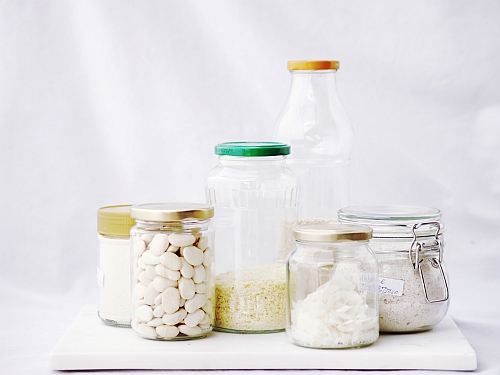
It was a four-day trek, and my food strategy was to keep things small, cheap, and utilitarian. For some reason I decided to base my menu around a sporty-person meal replacement bar called “One Square Meal.” My luxury dinner items were spaghetti and pesto sauce, and I rounded things out with a dense loaf of Danish rye bread and a small jar of peanut butter. I liked the idea of roughing it, rationing what little I had, like some kind of romantic vagabond. Each crumb would be valued and enjoyed.
My mistake was
assuming that a single One Square Meal bar would serve as one square meal. Upon
reading the label at my first meal stop, I learned that it takes two of
these bars to constitute a meal, and that it is not recommended to replace most
of your meals with meal replacements.
Read More
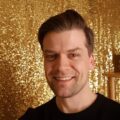 I'm David, and Raptitude is a blog about getting better at being human -- things we can do to improve our lives today.
“Enjoyment always requires attention.” Love this! Such a fresh take on mindfulness. ❤️ I found your blog when Becoming Minimalist linked to it, and am really enjoying it, thank you!