
Last year I wrote a post asking readers to consider how much they’d pay for a hypothetical miracle medicine that lengthens your life, makes you happier, reduces anxiety, lowers risk of disease and injury, increases personal confidence, and literally makes you more attractive, along with dozens of other benefits.
The only catch is that you can’t pay money for it, not directly. You gain and maintain access to it by doing a few hours of manual labor per week.
The punchline was that this miracle medicine deal isn’t actually hypothetical; it exists in our world and is available on precisely the above basis. It’s called “regular physical exercise.”
Not everybody takes this deal –- a few hours of labor per week for incalculable benefits – which is crazy when you frame it this way. We pay a lot more for things that don’t provide anything approaching the same return. But humans are like that.
Read More
Time always feels like it’s speeding up, but you might feel like time has been going exceptionally quickly these past few years. The first few days of a new month quickly become the 11th, then the next day it’s the 23rd, and then your credit card is due and it’s a new month again.
It might also be hard to remember, when people ask, what you did with those weeks and months. “Oh, I’ve just been, uh, working and stuff, I guess” you might say, when you bump into an acquaintance at the grocery store.
For some of us, the 2020s have also come with a certain lingering mental fog, or poor memory, which is another reason it can be hard to generate an interesting report about what you’ve been up to.
Naturally I have a theory about this, maybe even a cure. The hypothesis I’m about to share is not entirely crackpot — there is some scientific evidence behind this, but I’m mostly going off of my own intuitions here. Tell me what you think.
Read More
For a few years in my 20s I was determined to learn French. This endeavor began one day when a friend and I were camping, and our campsite was sandwiched between those of two German backpackers and a French tourist.
Sitting around a fire with our new friends that night, they told us to visit them if we ever came to Europe, and we said we would. My friend and I promised each other that he would learn German, I would learn French, and we’d make a trip there a few years later.
My friend did not learn German and to my knowledge never gave it another thought. (In hindsight I remember one of the Germans saying, “Oh, but you won’t be able to learn German! It’s too hard!) I did try in French though. I attended classes for a few years, bought flash cards and Michel Thomas CDs, and joined whatever mid-2000s language-learning websites there were. I was really into it.
I studied regularly and with great passion for the language, and also for my vision as a person who spoke impeccable French and maybe lived in Paris half the year. However, I didn’t do most of the things language teachers say to do, such as reading French news articles, or having conversations in French with native speakers. That stuff seemed a little extreme to me, or at least a little messy. I would do it later perhaps.
Read More
On a whim I decided to commit to three small changes for the remainder of Lent, not because I’m religious, but because I like the idea of temporarily renouncing things.
I kept the changes small because small is easy, and might still be worthwhile. First I renounced the scrolling of Twitter and Reddit, because I kind of got into that again over the winter. I just took five minutes to block them on my phone, and I don’t miss them. I also started drinking more water again. I’m not sure when I got away from actively drinking water, but now that I’m doing it again I feel more energetic. Lastly, I stopped pushing my bedtime past my old bedtime by 15 or 20 minutes. I forgot that I used to be more strict about that. Again, I’m not sure when that happened, but I was able to correct it in a day.
That’s it. There’s no attempt here to “reach my potential” or “turn the corner” or become a “new me,” I just decided to change these little things and keep them going at least until Easter.
My expectation was that such small changes would yield proportionately small benefits, maybe worthwhile enough to keep doing afterward. But I feel like I’m getting way more out of them than the small effort I’m putting in.
Read More

Next month I’m going on a trip to the US, but I won’t know the destination until I’m in the cab on the way to the airport.
A friend and I hatched this “surprise trip” idea a few years ago. One person chooses the destination and books flights and hotel, staying within a certain budget and other agreed parameters. The other person packs for any destination in the United States, and doesn’t find out where until shortly before going through airport security.
Most people probably wouldn’t want to travel like this, but it works for us. We both like surprises, and we both know how to have fun almost anywhere. We did it once already in 2018. I was the planner and my friend was the surprisee, and we had a great time touring Boston. This time I’m the surprisee, and anticipating this trip gives me a feeling I haven’t quite felt before.
It’s interesting because I’m looking forward to the trip, but I have no idea what I’m looking forward to. Thinking about it brings no images to mind, just an exciting void. Mostly I end up thinking about Boston, one of the few places I know we’re not going.
When my mind fails to find an image, a seed from which to envision this upcoming trip, it feels something like I’m standing on a cliff, looking out into impenetrable darkness. Nothing can be seen that way, and right now there is nothing that way, but it’s still the way I’m headed. The landscape will form just as I move forward into the nothing.
Read More
Imagine two friends, Steve and Fred, chatting at a New Year’s party. Both of them resolve to abstain from alcohol for January, and attend the gym regularly. They shake on it.
They don’t want to let each other down, and they both fulfill their commitments. Afterward, Steve keeps up his routine, and Fred soon drifts back to too much beer and not enough exercise.
Even though they accomplished the same thing, an astute third-party observer might have noticed a difference in how each man went about his goal. It was definitely hard for both of them; they both woke up at dawn, drank club soda while others were having a beer, and did lunges and squats until their muscles burned. For Fred this work felt like a battle against gravity (although a worthy one) and for Steve the change seemed strangely freeing.
Read More
The first time I tried an oyster, I was six or seven and my parents had company over. I immediately gagged and spit it out on the plate. It was the worst thing I ever had in my mouth.
A few months ago, at a restaurant, my friend ordered some oysters and offered me one. I said thanks but I don’t like oysters, and then realized that I wasn’t sure if that’s true, because I had only ever tried one, in 1987, for one second.
So I tried it. It was fine. I get why people eat them, but I’d rather order something else. Mostly I felt silly for steering clear of them all this time, based on barely an eyeblink of real-life experience.
The fact that I let thirty-five years pass before giving the oyster a proper second look is an example of what I call the “kryptonite effect.” The moment you become averse to something, you begin to avoid engaging with that thing, so you never actually get to learn what it’s all about, including any affinity you might have for it. It becomes like kryptonite to you. Ease and comfort around it can never develop.
Learning the ins and outs of something requires that you let yourself experience it, but with this thing you have a rule that you don’t do that. So it remains entirely in the mind, as this withering, radioactive entity that you never get near and never look at closely, even while people around you handle it freely and enjoy it completely.
Read More

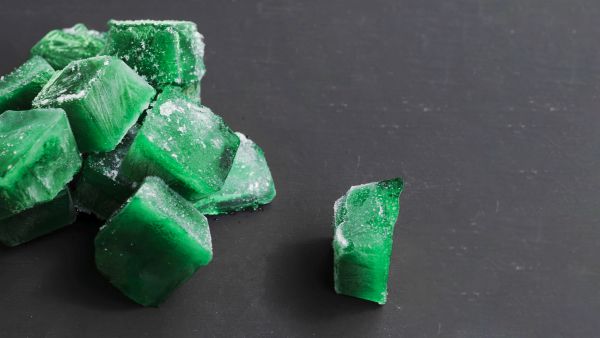
One time my friend came over with a candy thermometer and we made homemade fudge. I remember eating a lot of it.
At one point my friend was telling me an anecdote, and while I was listening I was absentmindedly devouring a wallet-sized slab of fudge.
“Whoa, slow down!” she said. “You’re eating it like a sandwich!”
This happens to me with sweets sometimes. Some deep, primordial impulse is driving me to physically incorporate the food substance into my body as efficiently as possible, like an ancient jellyfish subsuming a paralyzed sardine.
This impulse conflicts with a more complex, more human capability, which is to consciously appreciate the experience of eating the thing. Why did we bother to make fudge anyway, rather than just eat handfuls of sugar right out of the bag? Well, because humans have this ability, should we choose to exercise it, to appreciate the experiences we have, rather than just seek things in accordance to instinct and habit. It might be one of the best things about us.
Read More

Several billion years ago, a cosmic accident occurred that would eventually make some of us periodically unhappy. According to scientists, an gargantuan space object hit the earth during its formation, knocking it into a tilted, wobbly spin, which is the reason there’s a summer and a winter.
Under this strange condition, Earth’s creatures evolved and thrived. Eventually, some of them became philosophers and poets, who described this condition and its meaning to the rest of us. They noticed the way the sun’s arc changed throughout the year, and mused about the flamboyant moods and cycles of nature. They admired summer’s golden daffodils and shy sumacs, and lamented winter’s specter-grey frost and northward-thronging robins, probably unaware that the changing seasons aren’t some universal system of order, but a peculiar and convoluted local side-effect of two large rocks having collided long ago.
So we have a thing we call winter, whose days tend to be low in certain mood-improving qualities (light, warmth) and high in certain mood-diminishing qualities (cold, isolation). This sends many people into a compromised state for some of the year, until their part of the planet wobbles its way back around into the thicker light. So it goes.
Read More

Personal goals are generally expected to happen later. If you’ve always wanted to make short documentary films, for example, or zero all your inboxes, or write a detective novel, it probably doesn’t seem like that could happen now.
You will do it later, when life is different than it is now. Maybe when you’re on holidays, or when things slow down, or once you’ve dealt with a particular looming thing, life will begin to present the large spaces of unused time needed to finally get to your worthwhile but non-essential dreams.
The reason it’s hard to get going on personal goals is that you’re already using all of your time. No matter who you are, you’re already using all 24 hours, every day, for something. Because this will always be true, goals that happen at all must happen now, while you still don’t yet have time.
Belief in the mythical state of “when I have time” is a common pitfall. I’ve fallen for it routinely for most of my life. It’s based on a reasonable perceptual error: big goals need big chunks of time.
Read More
 I'm David, and Raptitude is a blog about getting better at being human -- things we can do to improve our lives today.
It all pretty the opposite if you're not in the US :) Since 2022 I've changed 3 countries and I'm planning to emigrate to the fourth one. I've had so much novelty and so many things to adapt to. However, time had never run so fast for me as in 2022...